Ductless Mini-Split or Ducts?
The short of it
A ductless mini-split makes the most sense where ducts are missing, hard to extend or would run through a hot attic, such as an addition, garage room or bonus room; whole houses with sound ducts often stay ducted.
Valley Home Ducts, figures checked against their sources · updated
This page links to PlumbingSupplyAndMore, which has the same owners as Valley Home Ducts. Those links are examples only; no figure here depends on them. About these links
On this page
What to carry away
- ENERGY STAR says a mini-split avoids duct losses, which it says can account for more than 30% of the energy a home spends on heating and cooling.
- A mini-split needs only a 3-inch hole in an outdoor wall for its refrigerant lines (ENERGY STAR, 2025).
- ENERGY STAR names additions, garages and rooms over a garage as good fits, all common in Central Valley ranch houses.
- ENERGY STAR estimates a typical duct system loses roughly a fifth to almost a third (20–30%) of its air, the problem a mini-split sidesteps and duct sealing fixes (ENERGY STAR).
- Anyone who handles refrigerant must hold EPA Section 608 certification, and California HVAC work falls under the CSLB's C-20 license.
- The federal 25C credit does not apply to equipment placed in service after December 31, 2025 (IRS).
When does a ductless mini-split make sense?
A ductless mini-split makes sense when the room you want to cool has no ducts, or when the ducts it would need would sit somewhere hostile. ENERGY STAR's 2025 mini-split overview lists "additions or outbuildings (e.g., shed, barn, garage) where extending ductwork or heating/cooling capacity is difficult" and rooms next to unconditioned space, such as a guest room above a garage.
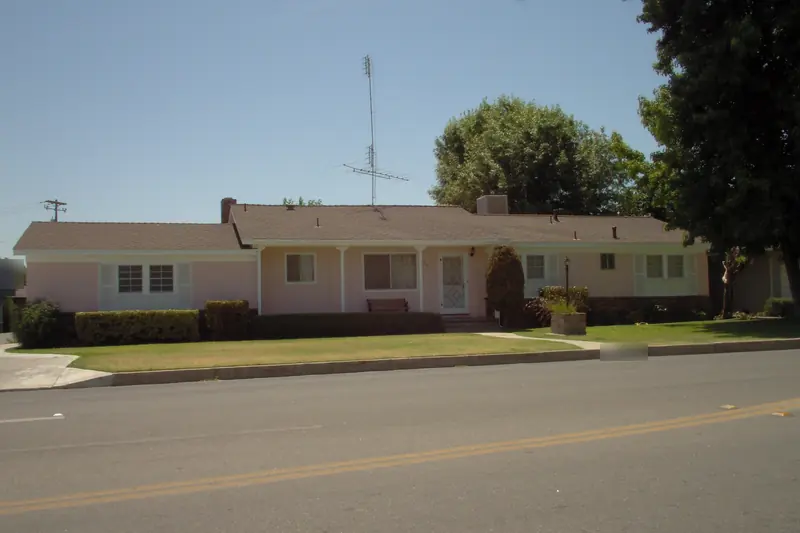
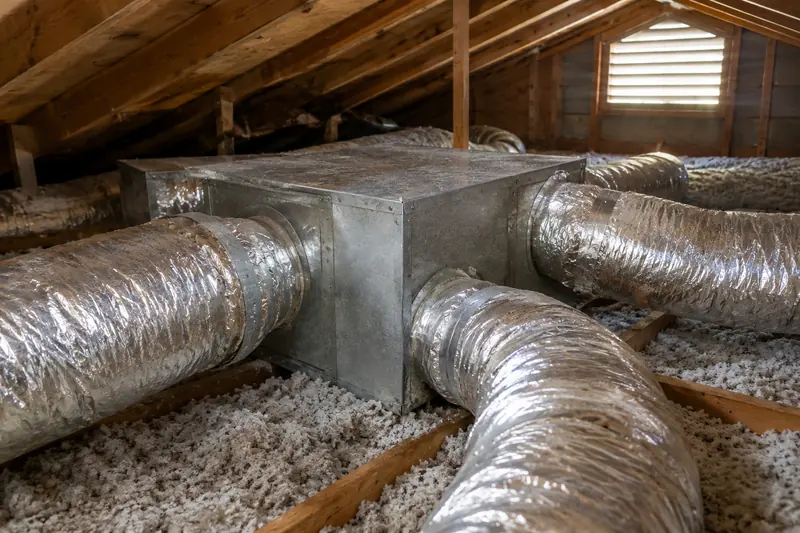
That list reads like a Valley neighborhood. A converted garage in Modesto, a back addition in Stockton or a bonus room over a Fresno garage usually means a long new duct run through an attic. A Department of Energy Building America guide warns that summer attic air can climb to 130°F or 140°F, and LBNL slides put roughly 90% of the energy lost from insulated attic ducts as not recovered. A mini-split skips that run.
The same ENERGY STAR sheet lists older homes that have never had central air, homes with costly electric heat, and hot or cold spots such as home offices. The Valley Home Ducts page on why attic ducts lose cooling explains the heat side of that trade.
What do you give up without ducts?
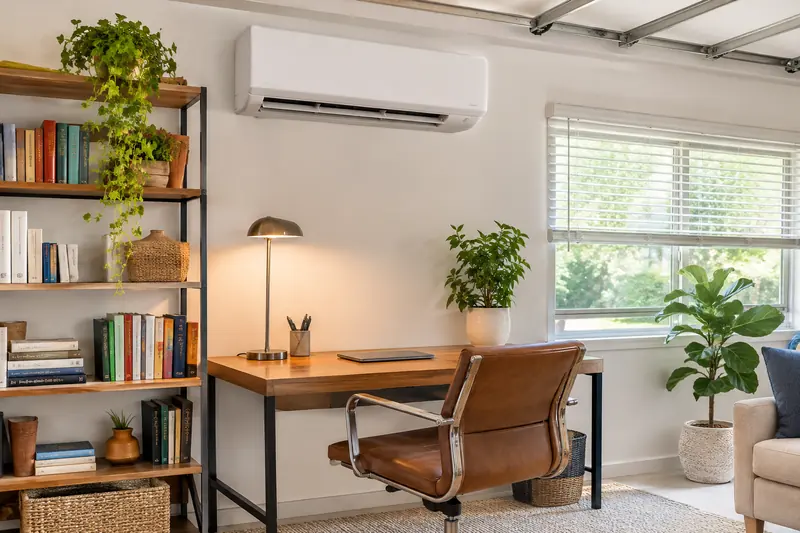
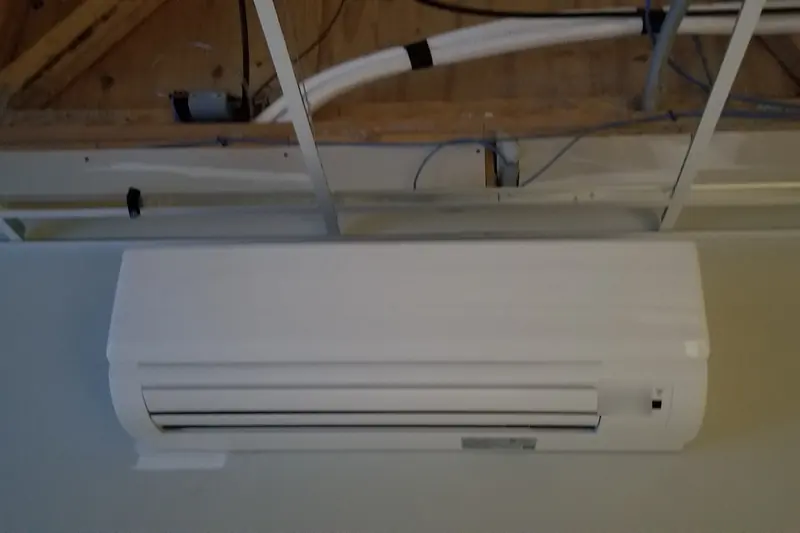
Going ductless trades one central system for several indoor heads, and each head serves the room or open area it sits in. ENERGY STAR describes "a head unit, or multiple head units" mounted on an interior wall or ceiling, with an outdoor unit outside. A closed bedroom door stops a wall head from reaching the next room, so a whole house usually needs several heads.
Filtration is the other trade. A ducted system can take a MERV 13 filter or the highest the system can handle, which matters in smoke season; a wall head has its own small filter, so many smoke-season plans add a portable air cleaner. Ducted systems also give one return path for the house, while ductless heads recirculate room air.
What you gain is ductwork's share of the energy bill. ENERGY STAR says mini-splits cool "directly from the unit," which removes duct losses that by its estimate can exceed 30% of a home's heating and cooling energy. Keep that figure apart from ENERGY STAR's separate 20–30% estimate for air leaking out of typical ducts; the two measure different things.
| Question | Central ducted system | Ductless mini-split |
|---|---|---|
| Where losses happen | Duct leaks and heat gain, worst in attics | No duct losses (ENERGY STAR) |
| What it needs in the wall | Supply and return registers per room | A 3-inch hole for refrigerant lines |
| How rooms are served | One air handler through supply ducts | One head per room or open area |
| Filter | Central filter, MERV 13 where the fan allows (EPA) | Small filter in each head |
| Who installs | C-20 licensed contractor (CSLB) | C-20 licensed contractor with EPA 608 technicians |
| Federal credit for 2026 installs | None (IRS) | None (IRS) |
Can you mix ducted and ductless?
Yes, and in many Valley houses a mixed setup is the practical answer. The main house keeps its central system, the leaks get sealed, and a mini-split takes the one room the ducts never reached well, such as the garage conversion or a hot back bedroom.
Mixing works best when each system has a clear job. If the central ducts are leaky, sealing them is still worth doing, because the mini-split only fixes the room it serves. ENERGY STAR's duct-sealing page counts uneven, hard-to-condition rooms and attic duct runs among the signs of leaky ducts, and a duct leakage test puts a number on it.
Mixing does not change the paperwork for the central side. Under the Title 24 changeout rules, replacing the central air handler, outdoor unit or coil still means sealing and verifying the connected ducts.
What about ducted mini-splits?
Ducted mini-splits are a middle option: a compact indoor unit hidden in a ceiling, soffit or closet feeds a few short ducts. ENERGY STAR lists styles including "wall mounts, floor mounts, ceiling cassettes, and ducted options that can be concealed."
The short ducts still count as ducts. Where they run matters as much as with a full system, so ask for them inside the conditioned space rather than in the attic; the Valley Home Ducts page on ducts in conditioned space covers why. Short runs still need sizing, and ACCA describes Manual D as offering "ANSI-approved standards for duct design."
Who installs a mini-split?
A mini-split is a job for a licensed HVAC contractor, not a weekend project. The CSLB's C-20 classification covers contractors who install and service air-conditioning systems "and the ducts, registers, flues, humidity and thermostatic controls and air filters" connected to them.
Refrigerant is the reason the work stays with pros. EPA rules say technicians who "maintain, service, repair, or dispose of equipment" that "could release refrigerants into the atmosphere must be certified" under Section 608. Connecting the line set, pulling a vacuum and charging the system are all refrigerant work. If you're unsure, call a licensed technician.
Sizing comes first. ACCA says Manual J "gives you the loads for single-family detached homes," and the head sizes should come from that load, not from a rule of thumb. The questions for a duct contractor on Valley Home Ducts work for a mini-split bid too.
Mini-split and duct numbers
- >30%share of space-conditioning energy ductwork can account forENERGY STAR (2025)
- 3 in.outdoor wall hole for refrigerant linesENERGY STAR (2025)
- 20–30%share of duct air lost, typical systemENERGY STAR
- Dec 31, 2025last placed-in-service date for the 25C creditIRS
What about the money?
There is no federal credit to plan around for a 2026 install. The IRS limits the 25C credit to equipment in service by the end of 2025, even though ENERGY STAR's 2025 sheet still mentions it. Statewide, the TECH Clean California program says its single-family heat pump money has been fully reserved since November 14, 2025.
Sacramento homes on SMUD have a separate path: SMUD lists heat pump rebates of $3,000, $2,000 and $1,000 depending on the system, "subject to availability of funding," and a SMUD Contractor Network installer is required. Check SMUD's rebate page for which equipment qualifies before you sign. PG&E, MID and TID customers should check their own utility's current page. The rebates and tax credits page tracks what was open on October 28, 2026.
How this page was put together
This page draws on ENERGY STAR's 2025 mini-split overview and its duct-sealing page, EPA's Section 608 certification requirements, the CSLB's C-20 classification text, ACCA's technical manuals page, the 2025 Title 24 changeout rules (via Energy Code Ace), DOE Building America and LBNL duct research, the IRS 25C page, TECH Clean California and SMUD, all read in October 2026. It leaves out prices, brands and model ratings, and gives no installation steps: that is refrigerant work for a licensed contractor.
Questions from the field
Is a mini-split cheaper to run than central air with leaky ducts?
It can be, because a mini-split skips duct losses that ENERGY STAR says can account for more than 30% of heating and cooling energy. Running cost still depends on the unit, the room and how the house is built. Sealing the existing ducts is the other way to recover those losses.
Can a mini-split cool a whole Valley house?
It can with several indoor heads, one per room or open area, because each head only serves the space it sits in. Closed doors limit how far one head reaches. A Manual J load calculation tells the contractor how much capacity each area needs.
Does a mini-split work in a converted garage?
ENERGY STAR names garages and other additions as a good fit, because extending ducts there is often difficult. A contractor should size the unit with a load calculation for the room as it will actually be finished, walls and door included.
Do mini-splits need a permit in California?
Treat a permit as standard practice for any new HVAC equipment, and ask the contractor to pull it. A licensed C-20 contractor knows what the local building department requires. Keep the final inspection record with your house papers.
Can a homeowner install a DIY mini-split kit?
Valley Home Ducts does not recommend it. Any step that could release refrigerant falls under EPA Section 608 certification, and the electrical connection is a licensed contractor's job too. If you're unsure, call a licensed technician.
Will a mini-split help during wildfire smoke?
A head's built-in filter is small, so it is not a substitute for a MERV 13 central filter or a CARB-certified portable air cleaner. It keeps a room cool with the windows shut, which helps. The smoke-season settings page covers what to do with a central system.
Are ducted mini-splits the same as central air?
No. A ducted mini-split uses a compact indoor unit and a few short ducts, while central air uses one air handler with a full duct system. Both need properly sized ducts, ideally inside the conditioned space.
More in Options and hiring