Getting Ducts Out of the Hot Attic
The short of it
Ducts in conditioned space perform best because heat and leaks stay inside the house; in an existing Valley home, burying sealed attic ducts in insulation is the usual practical step, and full relocation fits mainly into remodels.
Valley Home Ducts, figures checked against their sources · updated

On this page
What to carry away
- For HVAC performance, PNNL's Building America Solution Center (BASC) ranks indoors, within the conditioned envelope, as the top location for ducts.
- BASC accepts buried ducts for dry regions, provided they carry R-8 or better wrap and leak less than 3 cfm25 per 100 square feet of conditioned floor.
- A dropped-ceiling duct chase keeps ducts inside, but BASC calls it a difficult and most often not cost-effective retrofit in all but the simplest floor plans.
- LBNL estimated that about half of the energy lost from basement ducts is recovered, against about 10% for insulated ducts outside the house.
- SMUD's Seal and Insulate program lists deep-burying ducts and new sealed ductwork among the work it supports, up to $3,000.
- Title 24's new-duct rules apply when more than 25 feet of new or replacement duct goes in.
Most Valley houses were built with the air handler in a closet, garage or attic and every duct run above the ceiling. That layout is cheap to build and costly to run in July. Getting ducts inside the house is the most thorough cure for attic losses, but in a finished home it runs from fairly simple to not worth doing. This page lays out the options in the order a homeowner can usually reach them.
Ducts inside vs outside
- R-8duct insulation under buried ductsPNNL BASC
- <3 cfm25total leakage per 100 ft² for buried ductsPNNL BASC
- ~50%basement duct losses recovered by the houseLBNL
- $3,000SMUD Seal and Insulate maximumSMUD
Why is inside the house the best place for ducts?
Inside the house is the best place for ducts because any heat they gain or air they leak stays in rooms you are already cooling. The Building America Solution Center puts it bluntly: for HVAC performance, ducts belong within the home's conditioned space.
LBNL's duct sealing slides show how much location matters. For basement ducts, about half of the lost energy comes back into the house; for insulated ducts in an attic or crawlspace, about 90% is gone for good. A Valley attic, which can run 130–140°F on hot days per DOE Building America, is the far end of that scale; why attic ducts lose so much cooling has the detail.
What are buried ducts?
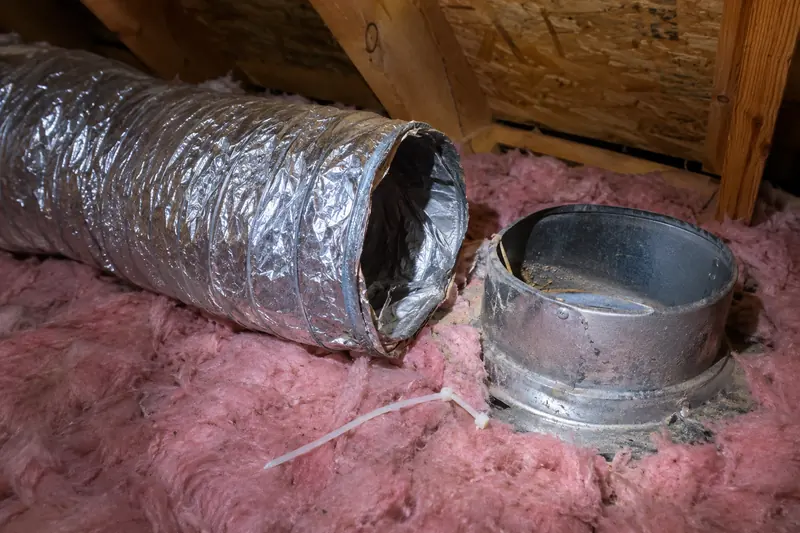
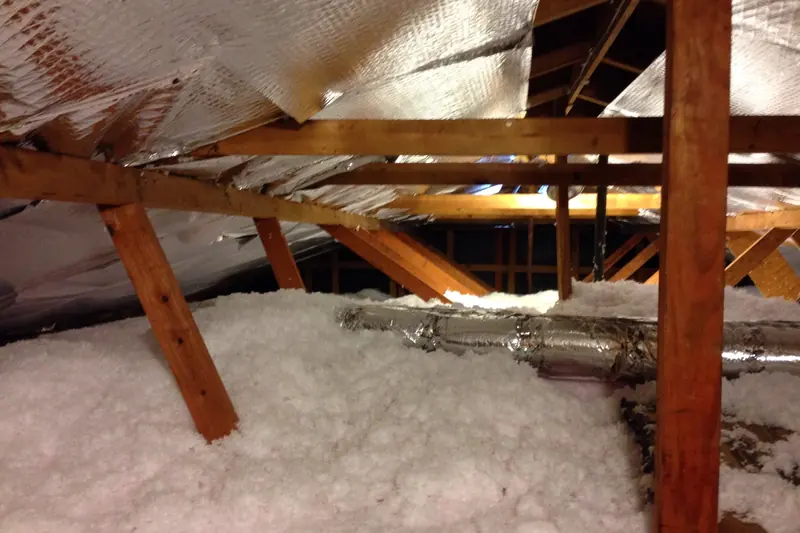
Buried ducts are attic ducts laid on or near the ceiling and covered with blown attic insulation, so the insulation shields them from attic temperatures. BASC accepts buried ducts for dry regions; in humid and marine zones it calls for closed-cell spray foam on the ducts first to deal with condensation.
The BASC specification is specific. Ducts should be wrapped in R-8 or higher duct insulation with a vapor barrier, total duct leakage should be under 3 cfm25 per 100 square feet of conditioned space, and the attic insulation should meet or exceed the code-required R-value for the attic. BASC's flex duct support page adds that in dry climates ducts may rest on the ceiling joists or deck and be covered with blown insulation.
For existing homes, BASC's advice is practical: where a vented attic has ducts on the attic floor, bury them when attic insulation is added. The order matters. Seal and test the ducts before burying them, because leaks are much harder to reach under a foot of loose fill.
Which retrofits move ducts indoors?
The main retrofits that bring ducts indoors are a dropped-ceiling or "fur-down" chase, usually along a hallway, and replacing some or all ducted rooms with ductless equipment. The BASC page on ducts in dropped ceilings describes building the chase so the ducts stay within the home's thermal envelope, which also protects the HVAC equipment from the extreme temperatures of attics and crawlspaces.
The critical detail, BASC says, is the air barrier between the top of the chase and the unconditioned attic above. If the chase is sealed from the attic, there should be no duct leakage to the outside, which is the number a duct test would check.
Ductless heads are the other route for rooms that are hard to reach. ENERGY STAR's mini-split factsheet notes that losses from ductwork can account for more than 30% of a home's space-conditioning energy use and that a ductless system needs only a three-inch hole in an outside wall for its lines. Installation is a licensed contractor's job; ductless mini-split vs ducts covers the trade-offs.
| Approach | What it involves | Best fit |
|---|---|---|
| Buried ducts | Sealed ducts wrapped to R-8, then covered by blown attic insulation | Existing homes adding attic insulation; dry climates |
| Dropped-ceiling chase | Ducts in a sealed soffit or hallway ceiling below the attic | Remodels and simple floor plans |
| Ductless heads | Wall or ceiling units fed by refrigerant lines, no ducts | Additions, garage conversions, hard-to-reach rooms |
| Seal and insulate in place | Mastic at joints, R-8 wrap, a duct test | Every attic system, and the step before burying |
When is moving ducts not worth it?
Moving ducts is usually not worth it when the floor plan is complex, the ceilings are low or the ducts can be sealed and insulated in place for far less. BASC says plainly that in all but the simplest floor plans, a dropped-ceiling chase will be a difficult and most often not cost-effective retrofit.
Sealing and insulating the attic ducts you have is the baseline that every other option builds on. ENERGY STAR says to start by sealing leaks with mastic or metal tape and insulating accessible ducts, and Title 24 sets R-8 for new ducts in climate zones 12 and 13. A well-sealed, well-insulated attic system that tests low may leave too little loss to justify tearing out ceilings.
What should you ask before a remodel?
Before a remodel, ask whether the new layout can put the air handler and trunk inside, and how the contractor will meet Title 24 for the new ducts. More than 25 feet of new or replacement duct triggers the new-duct rules, and an entirely new or complete replacement duct system must test at 5% or less of system air handler airflow.
Other questions worth asking:
- Will the duct design be done to ACCA Manual D, with a Manual J load for the rooms as remodeled? See Manual D duct sizing.
- How will the top of any chase be air-sealed from the attic, and will leakage to outside be tested?
- If ducts stay in the attic, will they be sealed, wrapped to R-8 and buried, and tested before the insulation goes on?
- In a house from roughly the 1930s through the 1970s, has existing duct wrap been sampled for asbestos by an accredited professional before demolition? EPA's ES+H guidance also rules out leakage testing of any duct system wrapped in asbestos insulation.
- In a house with a gas furnace or water heater, will a combustion safety test be done before and after, since tighter ducts and a tighter house change pressures? If you're unsure, call a licensed technician.
Sacramento homeowners can check SMUD's Seal and Insulate page, which lists up to $3,000 for work that includes installing and sealing new ductwork and deep-burying ducts, done by a Home Performance Program contractor. Elsewhere, check your utility's current page; rebates and tax credits has the status of state and federal programs as of October 2026.
How this page was put together
This page is based on three Building America Solution Center (PNNL) pages, covering buried ducts, ducts in dropped ceilings and flex duct support; LBNL's duct sealing slides (2008); ENERGY STAR's duct sealing page and 2025 mini-split factsheet; the DOE Building America measure guideline (2011); EPA's Energy Savings Plus Health guidance (2021); SMUD's Seal and Insulate page; and the state's 2025 Energy Code via Energy Code Ace; everything was read in October 2026. Not covered: savings percentages for buried or relocated ducts (BASC gives none, and a DOE lab paper on hot-dry homes could not be opened), costs, and sealed or unvented attics, for which no primary figures were read.
Questions from the field
Can I bury ducts that are already in my attic?
BASC's guidance for existing homes with vented attics is to bury floor-level ducts when attic insulation is added. Have the ducts sealed, wrapped to R-8 and tested first, because burying hides leaks.
Will buried ducts sweat in the Valley?
BASC treats dry climates as suited to buried ducts and calls for closed-cell spray foam on ducts only in humid and marine zones. The R-8 wrap with a vapor barrier is part of its specification either way.
Does a dropped hallway ceiling look odd?
It lowers part of a ceiling, usually a hallway, by the depth of the duct. That is why BASC limits its retrofit use to simple floor plans and why it fits best in a remodel.
Is a garage a conditioned space?
No. Title 24 treats ducts and equipment in a garage as a special case, with a 6% leakage limit or sealing all accessible garage leaks after a changeout.
Do ducts in conditioned space still need sealing?
Yes. Leaks inside the envelope waste less energy but still send air to the wrong rooms, and BASC's buried-duct spec still sets a leakage limit.
Does moving ducts change the equipment size?
It can. Lower duct losses mean a smaller load, which is one reason ACCA's Manual J load and Manual S equipment selection should be redone for a remodel.
More on attic heat