MERV 13 Filters for Wildfire Smoke
The short of it
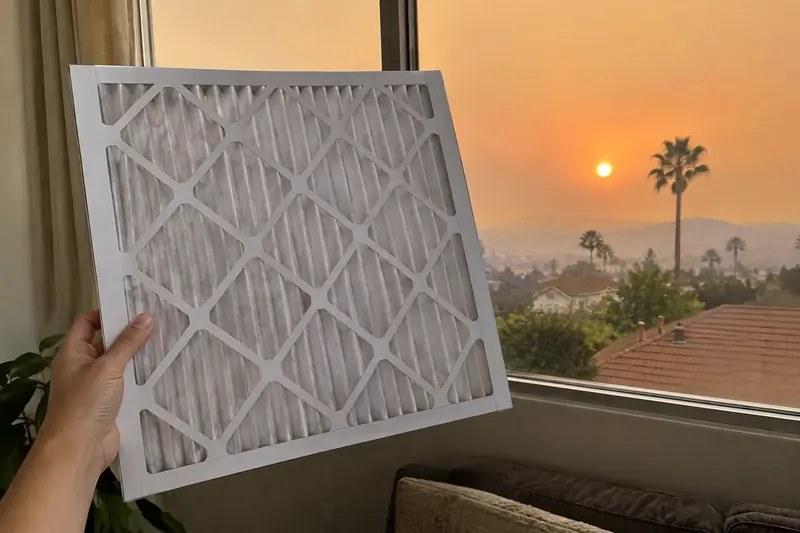
For wildfire smoke, a MERV filter rated 13 or higher is the target EPA and CARB both name, as long as your system's fan and filter slot can take the extra resistance.
Valley Home Ducts, figures checked against their sources · updated
This page links to PlumbingSupplyAndMore, which has the same owners as Valley Home Ducts. Those links are examples only; no figure here depends on them. About these links
On this page
What to carry away
- EPA says MERV ratings describe how well a filter captures particles between 0.3 and 10 microns.
- EPA's upgrade advice is at least MERV 13, "or as high a rating as your system fan and filter slot can accommodate."
- The California Air Resources Board's Smoke Ready page also calls for MERV 13 or higher on central systems.
- EPA's 2018 technical summary warns that existing home systems may lack the fan capacity for higher-resistance filters.
- Current Title 24 requires MERV 13 on new or fully replaced systems that push air through more than 10 ft of duct.
- ENERGY STAR says to check the filter monthly and change it at least every 3 months; smoke shortens that.
What does a MERV rating mean?
MERV, short for Minimum Efficiency Reporting Value, is a number from a lab test that says how well a filter traps airborne particles of different sizes. EPA's MERV page says the ratings report a filter's ability to capture particles between 0.3 and 10 microns, and EPA's Residential Air Cleaners technical summary (3rd edition, July 2018) explains that the test comes from ASHRAE Standard 52.2 and reports results on a MERV scale from 1 to 16.
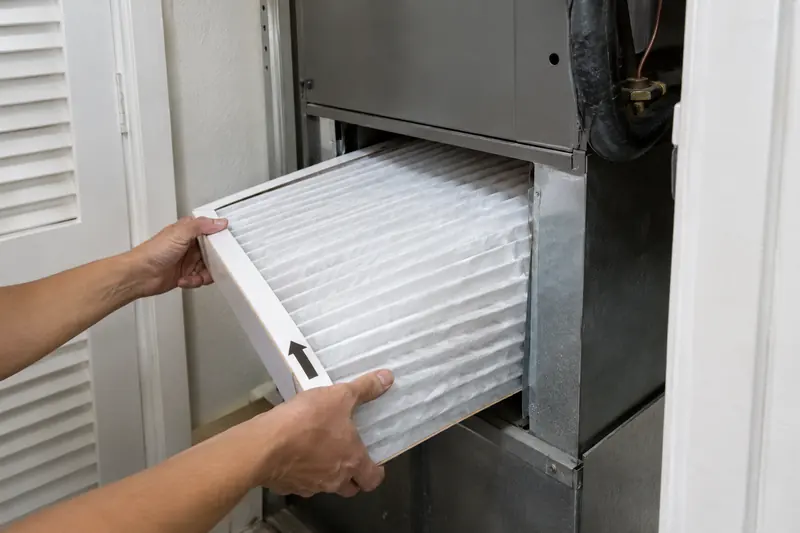
Higher numbers catch a larger share of small particles. The rating is printed on the filter frame or box along with its nominal size, such as 16 x 25 x 1 or 16 x 25 x 2 (inches). Read both before buying a replacement: the size has to match the slot exactly, or air slips around the edges and skips the media.
Why is MERV 13 the smoke target?
MERV 13 is the floor that both federal and California air agencies give for smoke season. EPA's wildfire and indoor air page suggests a high-efficiency HVAC filter such as one rated MERV 13, and upgrading to MERV 13 or higher if your system can accommodate it. CARB's Smoke Ready advice for central systems says the same: install a high-efficiency filter rated MERV 13 or higher.
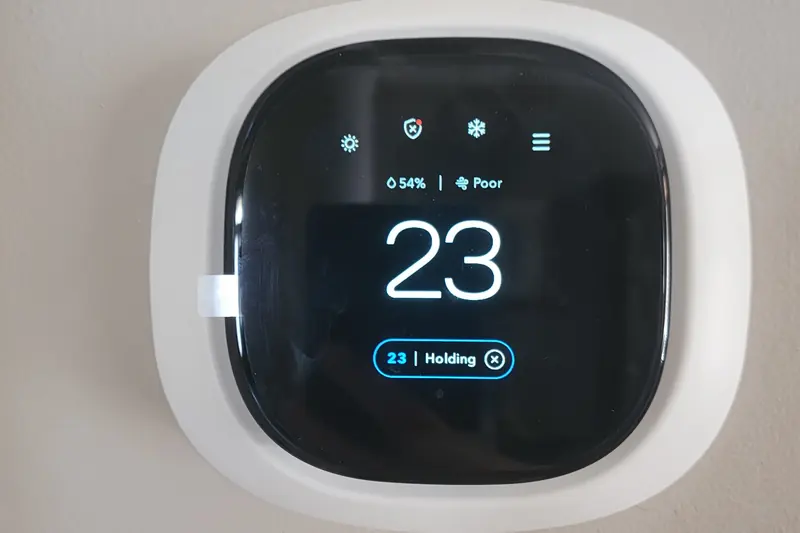
The filter only works while air moves through it. CARB and EPA both pair the filter advice with running the system fan on "on" rather than "auto" while the air is bad, which Valley Home Ducts covers on HVAC settings for smoke days. Keeping windows and doors shut matters as much as the filter, because smoke that leaks in through the house, or through leaky return ducts in a hot attic, still has to be filtered out again.
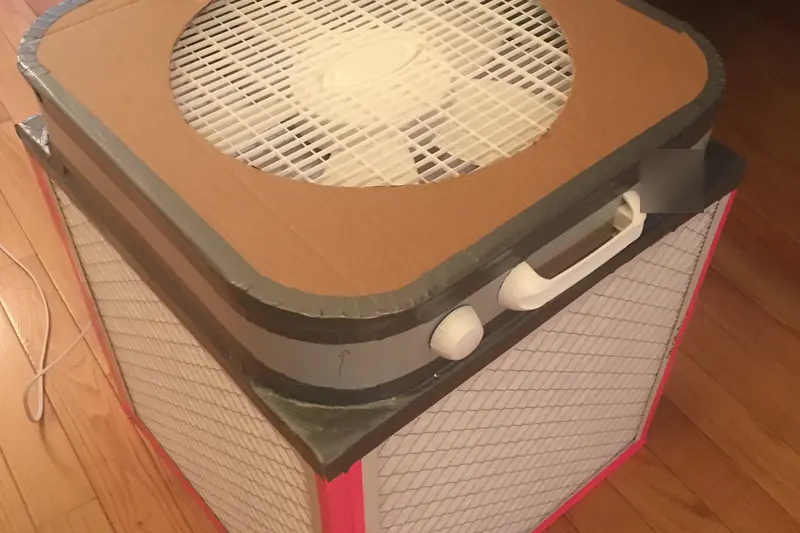
The same MERV 13 media is what EPA's researchers used for box-fan air cleaners. EPA's DIY air cleaner research found these fans can effectively reduce smoke concentrations in a laboratory setting, and that they were almost completely ineffective with dirty filters.
Can your system handle a MERV 13 filter?
Many systems can, but not all, and the answer comes from airflow, not from the filter box. EPA's technical summary says existing residential systems "may not have enough fan or motor capacity" for higher pressure-drop filters, and that simply installing a high-efficiency filter does not mean it will work as intended. A denser filter can cut the air the blower moves, which can show up as weaker airflow at the registers.
Three ways to find out:
- Read the equipment literature. The installation or owner's manual for the air handler or furnace often lists approved filter types and maximum pressure drop.
- Ask a licensed HVAC contractor to measure. EPA's technical summary says a professional should check airflow against what the equipment can deliver in an existing home. That measurement is the same one used in duct sizing with Manual D.
- Go deeper, not denser. A 2-inch or thicker filter of the same rating spreads air over more media, which is why Title 24 allows a 1-inch filter only when it is sized for low face velocity. Changing the filter cabinet is a contractor's job.
If you're unsure, call a licensed technician. The filter door is as far into the furnace or air handler as a homeowner should go; switch the system off at the thermostat before you slide a filter out.
A supply house lists air filters by size and MERV rating (PlumbingSupplyAndMore, same owners as Valley Home Ducts), which helps when you know the slot size and the rating your system takes.
How often should a MERV filter change in smoke season?
More often than the label says. EPA's wildfire page advises planning to replace HVAC filters more often than the maker recommends while smoke lingers, and changing them more frequently if they look heavily soiled when you pull them. ENERGY STAR's year-round baseline is to check the filter every month and change it at least every 3 months.
A rule of thumb on this site, not an agency figure: look at the filter once a week while the Air Quality Index is high, and swap it when the pleats have turned gray across the face. A loaded filter both stops catching smoke well and chokes airflow, so a clogged MERV 13 can do worse than a clean lower-rated one; EPA's advice is simply to change filters more often during smoke events. Keeping a spare filter on the shelf saves a trip on a smoky day.
What about Title 24's filter rule?
Current Title 24 Part 6 requires MERV 13 filtration on systems that supply air through more than 10 ft of ductwork, under §150.0(m)12 as reproduced by Energy Code Ace. The filters must be 2-inch nominal depth, or 1-inch if sized so face velocity stays at or below 150 ft per minute.
The rule applies to new systems and to entirely new or complete replacement systems, not to every existing furnace. So a 10 ft duct length triggering Title 24's MERV 13 rule doesn't oblige you to change an older system's filter today; it does tell you what a changeout under Title 24 should leave behind. Ask the contractor to show the filter rating and size on the paperwork.
| Filter | What the source says | Watch for |
|---|---|---|
| Below MERV 13 | Below the smoke target EPA and CARB name | Use the highest rating your system takes |
| MERV 13, 1-inch | EPA and CARB target; Title 24 allows it only when sized for 150 ft/min or less | Airflow drop on small slots |
| MERV 13, 2-inch | Title 24's standard depth for new systems | Needs a slot or cabinet that fits |
| Above MERV 13 | EPA: as high as your fan and slot can accommodate | Have airflow measured first |
| Box fan with MERV 13 filters | EPA lab work: effective with clean filters | Almost useless once filters load |
- MERV 13filter rating EPA and CARB name for smokeEPA
- 0.3–10 µmparticle sizes MERV ratings coverEPA
- 10 ftof ductwork that brings in Title 24's MERV 13 ruleEnergy Code Ace
- 150 ft/mintop face velocity for a 1-inch filter under Title 24Energy Code Ace
How this page was put together
This page is based on EPA's "What is a MERV rating?" (January 2026), "Wildfires and Indoor Air Quality" (September 2026), DIY air cleaner research page (July 2026) and Residential Air Cleaners technical summary (3rd edition, 2018); CARB's Smoke Ready page; ENERGY STAR's heating and cooling page; and Title 24 §150.0(m)12 as reproduced by Energy Code Ace. All were read in October 2026. Left out: filter brand names, filter prices, and any particle-capture percentage for a given MERV, because the sources read do not give one for home filters.
Questions from the field
Will a MERV 11 filter catch wildfire smoke?
It catches some of it, but it sits below the MERV 13 level that EPA and CARB both name for smoke. If your system can take MERV 13, use it during fire season; if it can't, use the highest rating it can handle and add a portable cleaner in the bedroom.
Is MERV 13 too high for a home system?
Not for many systems, but EPA's technical summary warns that some existing ones lack the fan capacity. Weak airflow at registers, a noisier blower or longer cycles after the switch are reasons to have a licensed HVAC contractor measure airflow.
Does a thicker filter work better than a thin one?
At the same MERV rating, a deeper pleated filter has more media, so air moves through it with less resistance. That is why Title 24's MERV 13 rule assumes 2-inch filters and allows 1-inch ones only when sized for low face velocity.
What do the numbers on the filter frame mean?
They are the nominal size in inches: width, height and depth. Copy the printed size from the old filter rather than measuring the slot and rounding, so the new one seals on all four edges.
Which way does the arrow on the filter point?
Toward the blower, in the direction the air flows, so it points away from the return grille and toward the air handler. If the old filter's arrow is unreadable, the equipment manual shows the airflow direction.
Is a filter upgrade still needed with a portable air cleaner?
They do different jobs. A portable cleaner cleans one room well; a MERV 13 filter cleans the air the system moves through the whole house while the fan runs. EPA's wildfire page covers both, and a filter upgrade only helps while the fan is running.
More from this row