What Happens at the HERS Rater Visit
The short of it
A HERS rater, now titled a state-certified ECC-Rater, visits after the installer to re-test the ducts, check airflow and refrigerant charge, and confirm the changeout meets Title 24.
Valley Home Ducts, figures checked against their sources · updated
On this page
What to carry away
- Under the 2025 Energy Code the verifier is an ECC-Rater; the 2022 code, which covers permits applied for through December 31, 2025, says HERS Rater (BSC Bulletin 25-01).
- Title 24's duct test table splits the work into "Installer Testing and Inspection" and "ECC Rater Testing and Verification" (Energy Code Ace).
- Ducts are held at 25 pascals for both the leakage test and the smoke test.
- The changeout pass marks are 10% total leakage or 7% leakage to outside, of system air handler airflow.
- On air-cooled A/C in climate zones 12 and 13, the rater also verifies refrigerant charge and a 300 CFM per ton minimum airflow.
- SMUD's heat pump rebate requires the job to "pass Title 24 via HERS CF3R," the rater's certificate (SMUD).
The rater is the second set of eyes on a changeout. The installer seals and tests; the rater comes back with the same kind of gauges and confirms the numbers, which matters in a Valley attic that DOE's Building America program says "can easily reach 130°F or 140°F" on hot summer days.
What is a HERS or ECC rater?
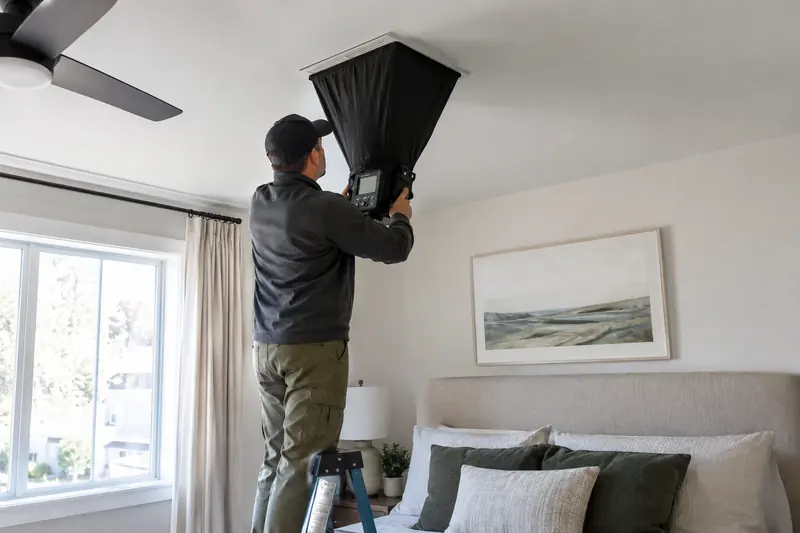
A HERS rater, now a state-certified ECC-Rater, is the third-party verifier who field-checks and diagnostically tests the work Title 24 requires on an HVAC changeout. The 2025 code text on Energy Code Ace uses "a certified ECC Rater" for smoke-test verification, and the 2022 text uses HERS Rater for the same job. One leftover line in the 2025 changeout section still reads HERS Rater; treat the two titles as the same role.
HERS stands for Home Energy Rating System, and ECC for Energy Code Compliance. Valley Home Ducts doesn't name rater providers: the state's provider page could not be read when this page was checked, and the title change is recent.
Why does a HERS rater come after the installer?
The rater comes after the installer because the code splits the work in two: the installer tests and records results on a Certificate of Installation, then the rater verifies them. The test procedure's own table, reproduced on Energy Code Ace, lists separate columns for "Installer Testing and Inspection" and "ECC Rater Testing and Verification."
That split protects the homeowner. Duct leakage is invisible from the hallway, and a 10% result versus a 25% result looks the same through a register. ENERGY STAR's duct sealing page says about 20 to 30 percent of the air moving through a typical duct system is lost, so a confirmed number has real value.
What happens during the HERS rater visit?
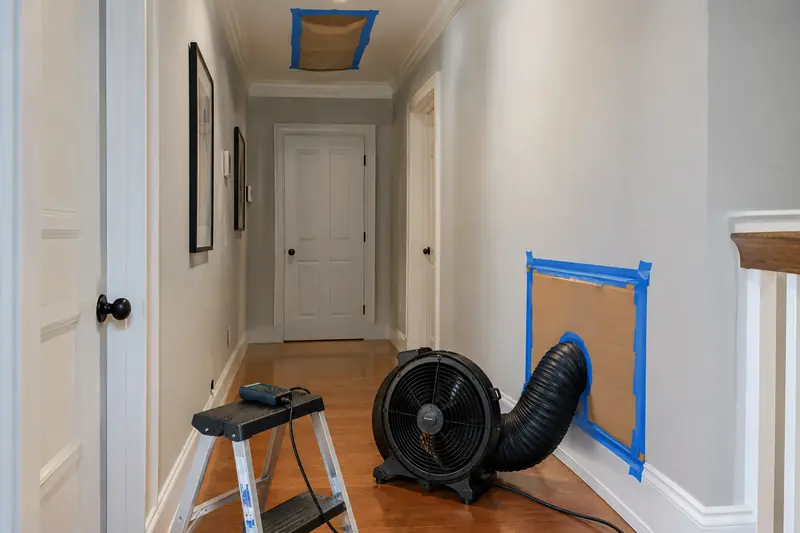
During the visit the rater repeats the duct leakage test and, on refrigerant changeouts, checks airflow and charge. For total leakage, every supply register and return grille is sealed except one large central return, where a calibrated fan attaches; the ducts are pressurized to 25 pascals (0.1 inch of water) and the fan flow is recorded as leakage (RA3.1.4.3.1). The result is divided by air handler airflow: measured, or a nominal 400 CFM per ton for a single split system.
For leakage to outside, a blower door in an exterior doorway brings the house to 25 pascals while the duct fan matches it, so only air escaping the living space is counted. Either path passes the ducts on a changeout: 10% or less total, or 7% or less to outside. The duct leakage test page works through the arithmetic.
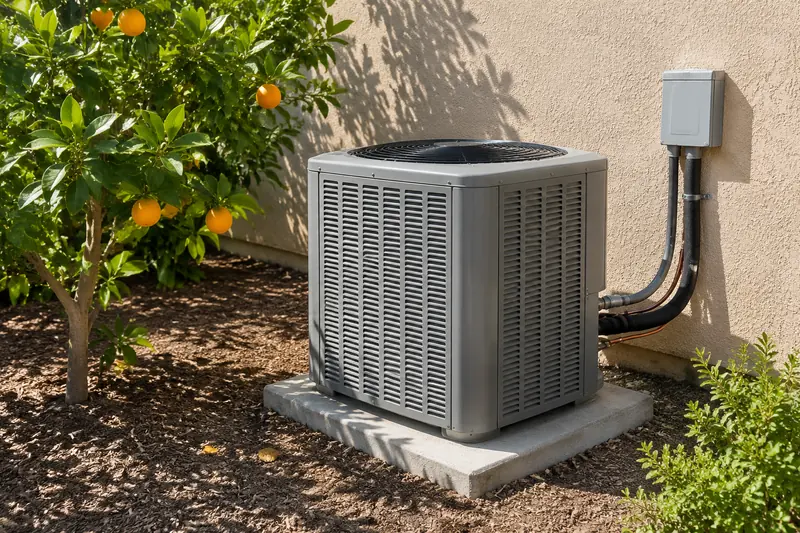
On air-cooled A/C in climate zones 2 and 8 through 15, and on heat pumps everywhere, the rater also verifies airflow (at least 300 CFM per ton, 250 for small-duct high-velocity systems) and refrigerant charge, per the refrigerant section. The code text says: "The ECC-Rater shall verify the charge using RA3.2.2 and RA3.3." Refrigerant and electrical work stay with the licensed pros. If you're unsure, call a licensed technician.
How do you get ready for the HERS rater?
Getting ready means giving clear access. Clear a path to the air handler, the attic hatch and every register and return grille; move rugs and furniture off floor registers; put pets in a closed room; and have someone home who can open the garage and side yard. Don't climb into a hot attic to "pre-check" anything: attic heat, gaps between joists and fiberglass make it a job for the pros, as the attic sealing safety page explains.
If the home has a gas furnace or water heater, know where the CO alarms are and that they work. Tightening ducts can change pressures near gas appliances, and ENERGY STAR's duct sealing flyer tells contractors to check for backdrafting and run a combustion safety test after sealing. If a CO alarm sounds or you smell gas, leave the building first and call 911 or the gas utility from outside.
What paperwork should you keep from a HERS rater visit?
Keep the permit, the installer's Certificate of Installation and the rater's verification certificate. SMUD's heat pump rebate page names the rater's form as the CF3R and makes a pass on it a condition of payment. Rebate programs, buyers and future contractors may ask for it.
Keeping the record has a second payoff. Ducts "documented to have been previously sealed" through field verification and diagnostic testing are one of the three exceptions to the changeout rule (§150.2(b)1E), so your verified result can matter at the next equipment swap. Ask the contractor for copies of every form at the final, and write the permit number on the folder.
What if the ducts fail the HERS rater test?
If the ducts fail, the contractor seals more and the rater re-tests. When neither the 10% nor the 7% limit can be reached, the code's fallback is to seal all accessible leaks and verify them by visual inspection and a smoke test. In that test, theatrical or other non-toxic smoke is injected while the ducts are held at 25 pascals, and the system passes when "No visible smoke exits the accessible portions of the duct system."
The visual inspection looks at the usual leak points listed in the procedure: connections to plenums and coils, refrigerant line and drain-trap penetrations, the air handler door panel, register boots and duct joints. ENERGY STAR says to seal with mastic or metal tape, never cloth duct tape; the mastic vs foil tape page compares the two. Sealing a very leaky system can raise duct pressure and cut total airflow, the DOE Building America guideline warns, so airflow should be checked again after the work.
Rater visit numbers
- 25 Paduct pressure during leakage and smoke testsTitle 24 RA3 (Energy Code Ace)
- 7%changeout limit for leakage to outsideTitle 24 (Energy Code Ace)
- 300 CFMper-ton airflow floor the rater checksTitle 24 (Energy Code Ace)
- 20–30%share of duct airflow typically lostENERGY STAR
| Step | Installer | ECC-Rater (HERS Rater under the 2022 code) |
|---|---|---|
| Duct leakage test | Seals ducts, tests, fills out the Certificate of Installation | Re-tests and verifies 10% total or 7% to outside |
| Smoke-test fallback | Seals all accessible leaks | Verifies by visual inspection and smoke test |
| Refrigerant charge | Charges by the standard procedure or by weigh-in | Verifies the charge |
| Airflow | Delivers at least 300 CFM per ton | Verifies airflow |
| Paperwork | Certificate of Installation | Verification certificate (CF3R) |
How this page was put together
What the rater does here comes from the code itself: the changeout, new-duct and refrigerant sections of Title 24 Part 6 (§150.2(b)), plus the RA3 duct test procedures, as Energy Code Ace reproduces them in the 2025 and 2022 editions. Dates come from the BSC's July 2025 bulletin; the CF3R name from SMUD's heating and cooling rebate page; leakage context from ENERGY STAR and DOE Building America. All were read in October 2026. The CEC's rater program pages could not be reached, so provider names, fees, sampling rules and the CEC's homeowner instructions are not on this page.
Questions from the field
Who hires the HERS rater?
The code does not say who books the rater, and practice varies. Ask the contractor before signing whether the rater's visit is arranged by them and included in the bid.
Is the rater the same as the installer?
No. The code's test table has separate columns for installer testing and ECC-Rater verification, and the rater's job is to confirm the installer's results in the field.
Can the rater pass ducts that leak more than 10%?
Yes, on two paths. Ducts can pass at 7% or less leakage to outside even if total leakage is higher, and if neither number can be met, sealing all accessible leaks verified by smoke test also complies.
Does the rater go into the attic?
The visual inspection covers accessible duct connections, register boots and joints, many of which are in the attic in Valley homes. That is the rater's job, not the homeowner's.
What is a CF3R?
SMUD's rebate rules use it as the name for the rater's Title 24 verification certificate. Keep a copy with the permit and the installer's Certificate of Installation.
Is the rater checking my thermostat?
On refrigerant changeouts the code requires all thermostats on the system to be replaced with setback thermostats. Ask the contractor how that item is documented on the job.
Next in this row