HVAC Settings on Smoke Days
The short of it
The HVAC settings for wildfire smoke that CARB and EPA give are simple: fan on rather than auto, fresh-air intake closed, a MERV 13 filter, windows shut, and no swamp cooler or whole-house fan.
Valley Home Ducts, figures checked against their sources · updated
This page links to PlumbingSupplyAndMore, which has the same owners as Valley Home Ducts. Those links are examples only; no figure here depends on them. About these links
On this page
What to carry away
- The California Air Resources Board's Smoke Ready page says to set the system fan to "on" rather than "auto," which runs the system intermittently.
- CARB and EPA both say to close the fresh-air intake or switch to recirculate.
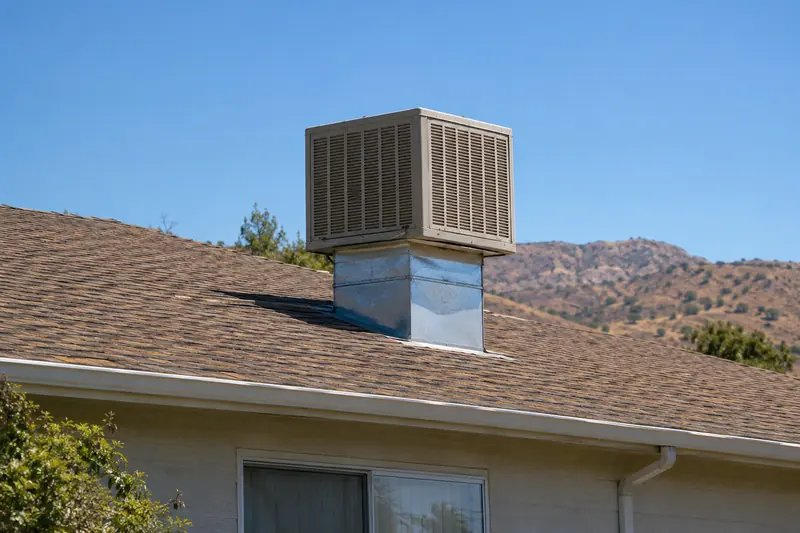
- CARB: "Do not run swamp coolers or whole house fans" on smoke days.
- Electronic air cleaners sold in California must emit 0.050 ppm of ozone or less, per CARB; CARB strongly advises against ozone generators.
- Box-fan air cleaners: only fans marked UL or ETL, 2012 model or newer, with MERV 13 filters (CARB, EPA).
- Return leaks in an attic can draw in 130°F air, says DOE Building America; on a smoke day that air carries smoke too.
Which HVAC setting helps most on wildfire smoke days?
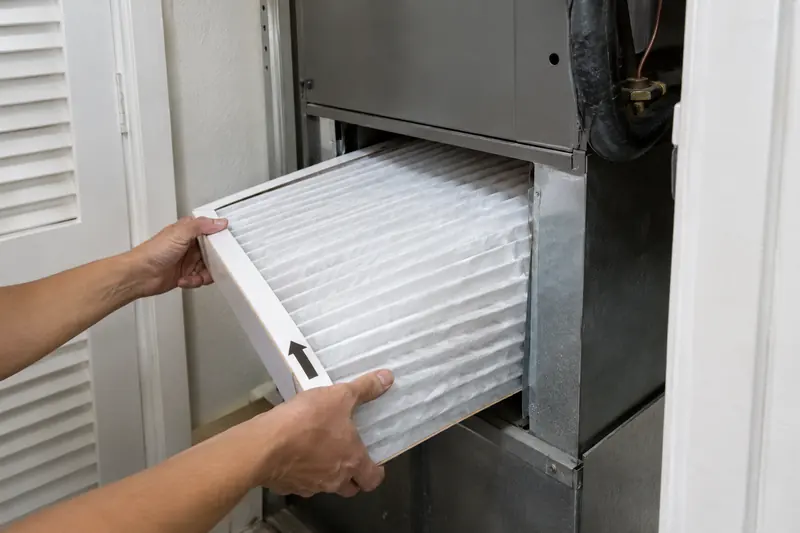
Switch the thermostat's fan from "auto" to "on." CARB's Smoke Ready advice is to set the system to "on" so air is filtered constantly, rather than "auto," which runs it intermittently. EPA's wildfire and indoor air page gives the same instruction for systems with a high-efficiency filter, so the blower keeps pulling room air through the filter whether or not the compressor is cooling.
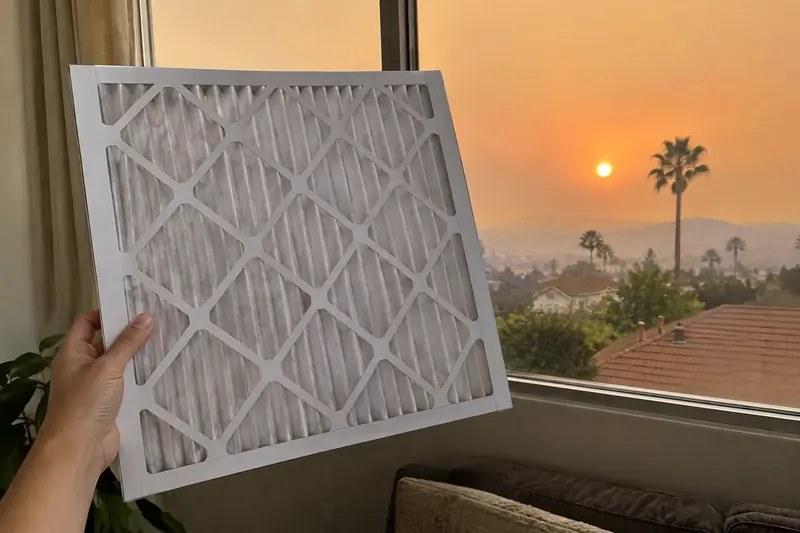
The fan setting only pays off with a good filter in the slot. Both agencies name MERV 13 or the highest rating your system can handle; the Valley Home Ducts page on MERV filters for wildfire smoke covers whether your blower can take one. Set the cooling temperature as usual. "Fan on" does not cool by itself; it keeps the air moving.
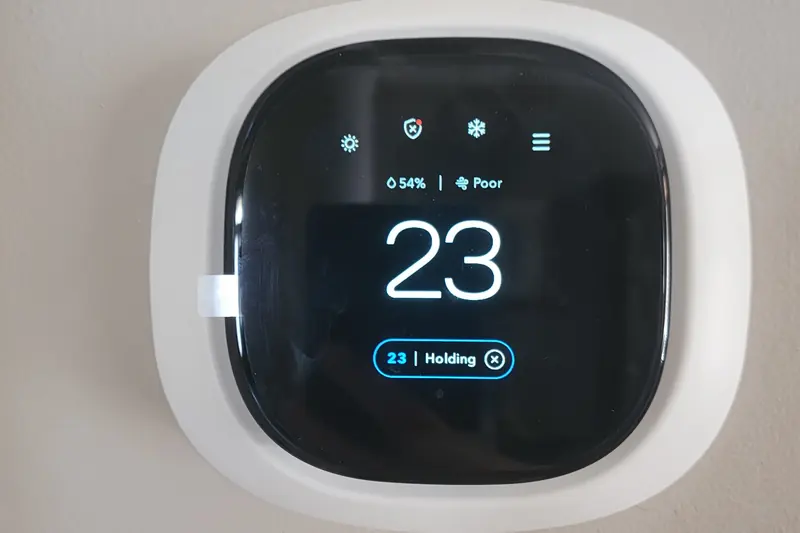
Many wall thermostats put the fan choice on its own button or menu, separate from heat and cool. If yours has no fan setting, it may be an older control. Title 24 requires all thermostats on a system to be replaced with setback thermostats when refrigerant parts are changed, per Energy Code Ace, so a changeout is a natural time to get one. A supply house's thermostat listings (PlumbingSupplyAndMore, same owners as Valley Home Ducts) show the range, from basic programmable units to models with a separate fan schedule.
Should you close fresh-air intakes during wildfire smoke?
Yes. CARB says to close the fresh-air intake so the system runs in recirculation mode and outdoor smoke stays out, and EPA says to set the system to recirculate or close the outdoor intake damper. EPA's first step is simply to find out whether your central system has an intake; many split systems don't.
Signs you have one: a duct or hood from outside that joins the return, a motorized damper near the air handler, or a "ventilation" or "fresh air" setting on the thermostat. If a control exists, use it. If the damper is inside the equipment cabinet or wired to a control you can't find, ask the HVAC contractor who installed it to show you how it closes before fire season. Don't open the cabinet to look; the only switch a homeowner should touch is the thermostat or the system's service switch. If you're unsure, call a licensed technician.
Two other settings matter. CARB says not to run swamp coolers or whole-house fans on smoke days, since both pull outdoor air through the house by design. Keep windows and doors closed, and use the next clean-air break to air the house out, which EPA also suggests.
Do leaky ducts pull wildfire smoke in?
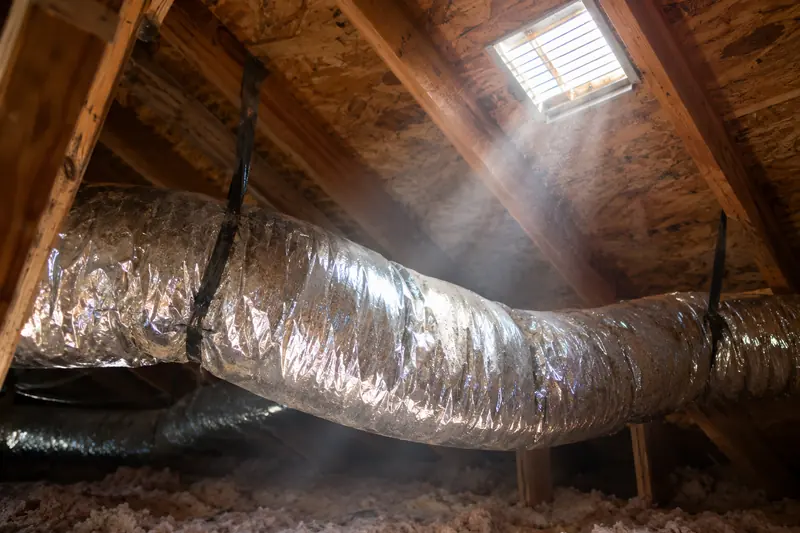
They can, through the return side. DOE's Building America measure guideline on sealing ducts notes that return leaks can draw 130°F attic air into the system, and an attic on a smoke day holds outdoor air. Air pulled in through an attic return leak enters after a grille filter, so it reaches the blower and coil unfiltered.
ENERGY STAR puts typical duct losses at about 20 to 30 percent of the air moving through the system. A duct leakage test tells you how much of that applies to your house, and sealing attic ducts is the lasting fix. Before anyone seals ducts near a gas furnace or water heater, a combustion safety test belongs in the job, before and after, because tighter ducts can change pressures around those appliances.
What about portable air cleaners?
For a single room, a portable air cleaner is the usual next step. CARB says to use a certified portable cleaner and run it continuously on the highest setting, noting such units "can greatly reduce indoor particle levels." EPA adds three points: pick a cleaner sized for the room, place it where people spend the most time, and make sure it does not produce ozone. EPA says units with a known clean air delivery rate (CADR) are typically preferred.
Choose one room as a cleaner-air room, usually a bedroom, keep its door shut and run the cleaner there. EPA's DIY air cleaner research found that box fans with filters attached can effectively reduce smoke in a lab and were almost completely ineffective with dirty filters. CARB's rule for the fan itself: only certified box fans marked UL or ETL, 2012 model or newer.
Why avoid ozone generators?
CARB strongly advises against the in-home use of ozone generators. Under California's air cleaner regulation, electronic air cleaners must meet an ozone emission limit of 0.050 parts per million (50 ppb) and carry a CARB certification label; uncertified ozone generators cannot be sold in California. CARB keeps a list of certified air cleaning devices to check before you buy.
Since October 2020 the rule also covers electronic in-duct air cleaners, so any ionizer or electronic unit a contractor proposes to mount in your ductwork should be CARB-certified. A pleated MERV 13 filter adds no ozone at all. If a product promises to "purify" smoke with ozone or ions, leave it on the shelf.
| Setting | What to do | Source |
|---|---|---|
| Thermostat fan | "On," not "auto" | CARB, EPA |
| Fresh-air intake | Closed, or recirculate mode | CARB, EPA |
| Swamp cooler or whole-house fan | Off | CARB |
| Central filter | MERV 13 or the highest the system can handle | CARB, EPA |
| Portable air cleaner | Certified, sized for the room, highest setting | CARB, EPA |
| Box-fan cleaner | UL or ETL fan, 2012 or newer, clean MERV 13 filters | CARB, EPA |
| Ozone generator | Don't use | CARB |
- 0.050 ppmozone limit for electronic air cleaners in CaliforniaCARB
- 2020year in-duct electronic cleaners came under CARB's ruleCARB
- 2012oldest box-fan model year CARB accepts for DIY cleanersCARB
- 130°Fattic air a leaky return can pull inDOE Building America
How this page was put together
This page is based on the California Air Resources Board's Smoke Ready page and air cleaner consumer page, EPA's "Wildfires and Indoor Air Quality" (September 2026) and DIY air cleaner research page (July 2026), ENERGY STAR's duct sealing page, DOE Building America's 2011 duct sealing measure guideline, and the Energy Code Ace copy of Title 24 §150.2(b)1F. Every source was opened in October 2026. Not covered here: brand names of air cleaners and thermostats, CADR targets by room size, and health advice beyond what CARB and EPA state.
Questions from the field
Should I run the AC during wildfire smoke?
Yes, if it recirculates indoor air, as a split system with no fresh-air intake does. Keep the fan on "on," the intake closed and a clean MERV 13 filter in place; CARB's caution applies to swamp coolers and whole-house fans, which pull in outdoor air.
Does "fan on" cost much more to run?
It runs the blower all the time instead of only during cooling or heating calls, so it uses more electricity. The sources read give no figure for that cost, so Valley Home Ducts offers none; switch back to "auto" once the air clears.
Can I run a swamp cooler with the windows closed during smoke?
No. CARB says not to run swamp coolers on smoke days at all. An evaporative cooler works by pushing outdoor air through wet pads and out through open windows, so closing the windows does not make it a recirculating system.
Are ionizers safe to use during smoke events?
Only certified ones may be sold in California, and CARB's list shows which meet the 0.050 ppm ozone limit. EPA's wildfire advice is to make sure any portable cleaner does not produce ozone, so a plain filter unit is the simplest choice.
When should I open the windows again?
When outdoor air improves, even briefly. EPA suggests taking advantage of cleaner spells to air out the house, then closing up again if smoke returns.
How often should I change the filter while running the fan on "on"?
More often than usual, because the filter sees far more air. EPA advises changing HVAC filters more often than the maker recommends during smoke and whenever they look heavily soiled.
Next in this row