Row B 3 pages and this overview
Duct Testing and Title 24
The short of it
Duct testing in California is required when you replace an air handler, condensing unit or coil: the connected ducts must leak 10% or less in total, or 7% or less to outside.
Valley Home Ducts, figures checked against their sources · updated
What to carry away
- Replacing the air handler, the outdoor condensing unit or a coil triggers duct sealing and testing under Title 24 §150.2(b)1E (Energy Code Ace, 2025 code).
- The pass marks on a changeout are 10% or less total leakage, or 7% or less leakage to outside, measured against system air handler airflow.
- If neither number can be reached, every accessible leak is sealed and checked by visual inspection and a smoke test.
- Systems with under 40 linear feet of duct are exempt from the changeout test, as are asbestos ducts and ducts already verified as sealed.
- Permits applied for on or after January 1, 2026 fall under the 2025 Energy Code (BSC Bulletin 25-01).
- ENERGY STAR puts typical duct losses at about 20 to 30 percent of the air moving through the system.
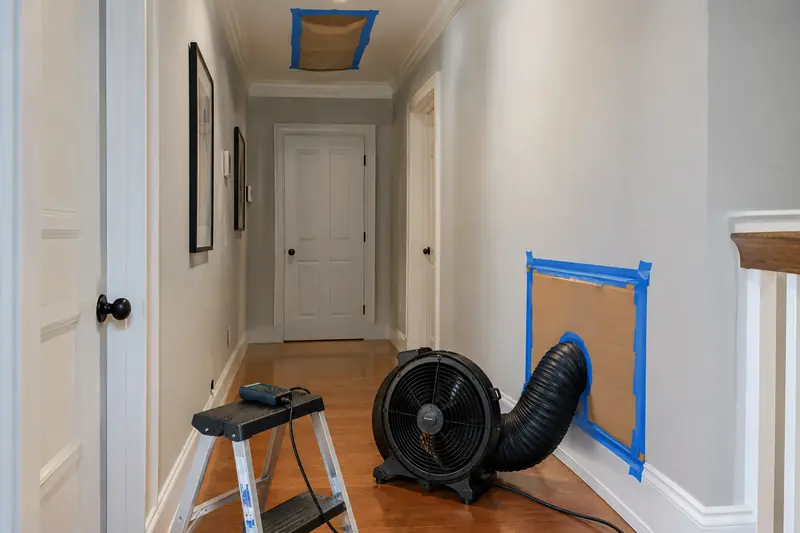
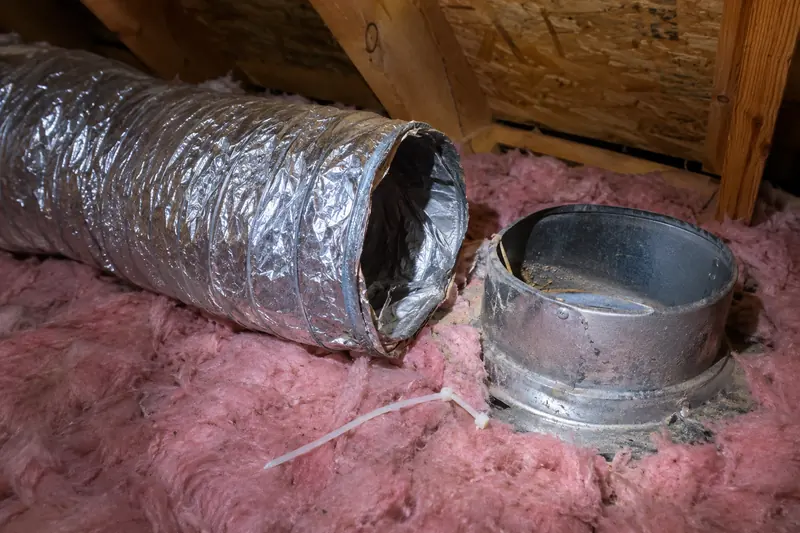
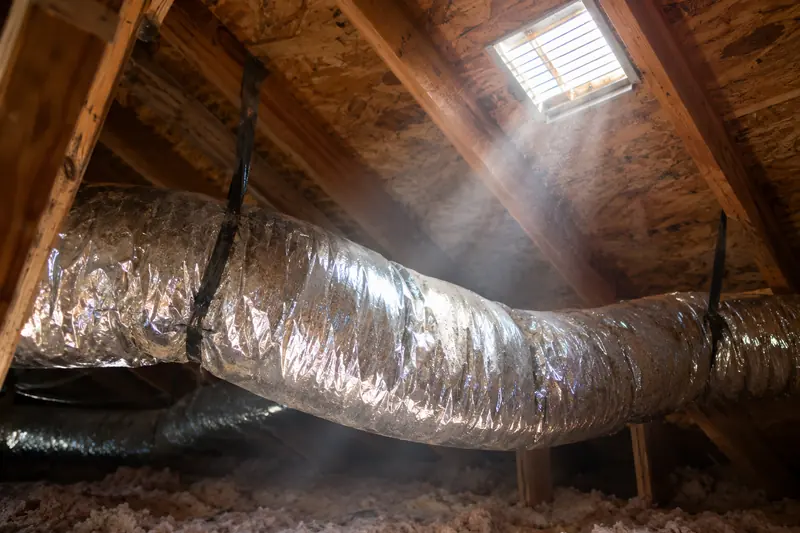
Valley ducts often run through attics, which DOE's Building America program says "can easily reach 130°F or 140°F" on hot days. Title 24, California's energy code, uses the HVAC changeout as the moment to find and fix those leaks.
When does California require a duct test?
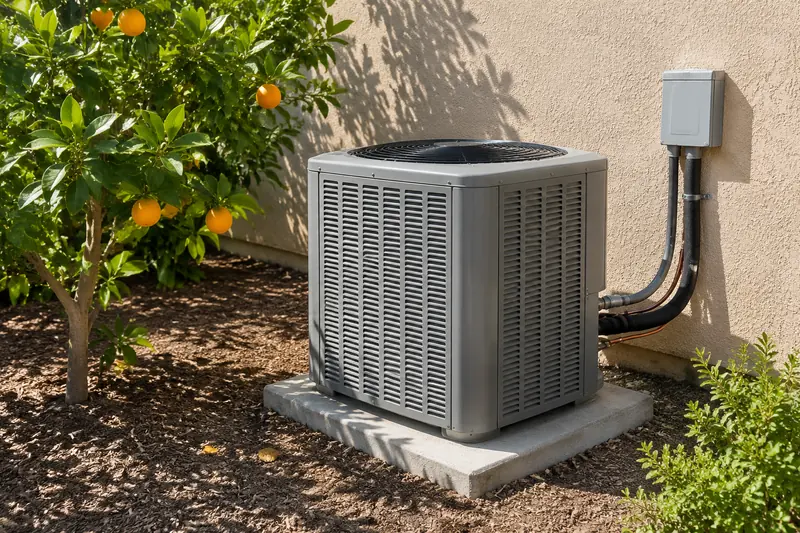
California requires a duct test when space-conditioning equipment is installed or replaced: the air handler, the outdoor condensing unit of a split system or heat pump, or a heating or cooling coil. The code text, reproduced on Energy Code Ace, says the connected duct system "shall be sealed" and verified by field verification and diagnostic testing. That applies in every climate zone, including zone 12 (Stockton, Modesto, Sacramento) and zone 13 (Fresno).
A second rule covers new ductwork. Past 25 feet of added or swapped duct, §150.2(b)1D's new-duct rules take over, and a duct system that is all new reads 5% or lower to pass (Energy Code Ace). The 25-foot number and the 40-foot exception are separate rules; the changeout rules page sets them side by side.

What do the leakage limits mean?
The limits are percentages of system air handler airflow, so a 10% result means the ducts leak a tenth of what the blower moves when the ducts are pressurized for the test. Total leakage counts every leak, including ones into the living space; leakage to outside counts only air lost to the attic, crawlspace, garage or outdoors, which is why its limit is lower at 7%. Ducts or equipment in a garage face a 6% limit, or sealing of all accessible garage leaks (Energy Code Ace).
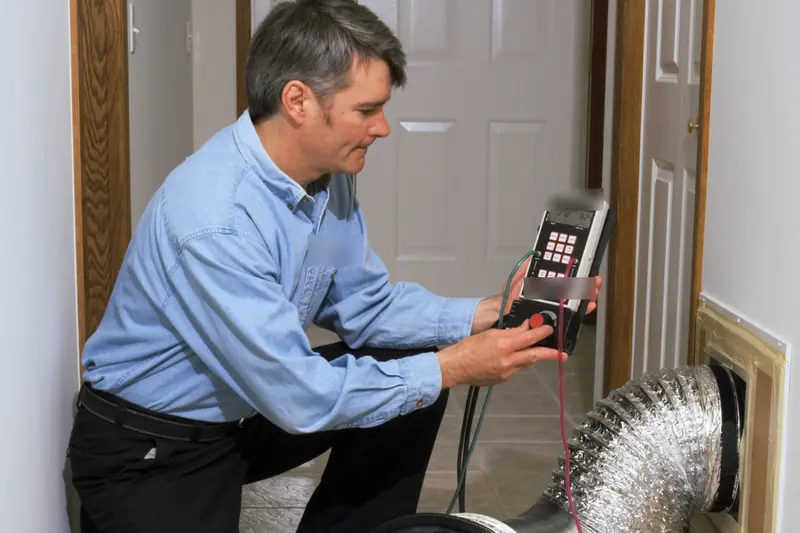
The test itself pressurizes the ducts to 25 pascals, about 0.1 inch of water column, and reads how much air a calibrated fan must push to hold that pressure. The duct leakage test page walks through the setup and the arithmetic.
Who does the testing?
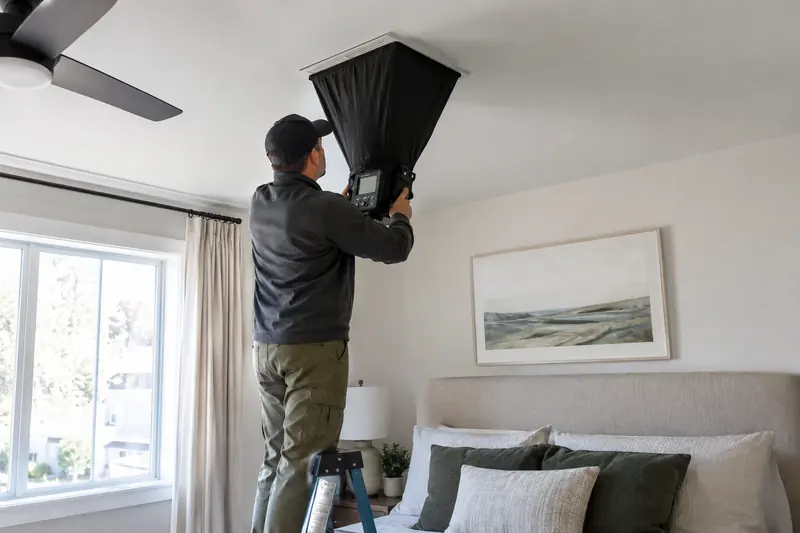
Two people test: the installing contractor tests and fills out a Certificate of Installation, then a state-certified ECC-Rater (known as a HERS Rater under the 2022 code) verifies the result in the field. The 2025 code uses the ECC-Rater title in its duct and refrigerant sections. People still search for "HERS rater," and the job is the same.
Installers in California hold a state contractor license; the Contractors State License Board's classification list puts heating and air conditioning under C-20, and its license lookup checks a number or business name.
What if the ducts fail?
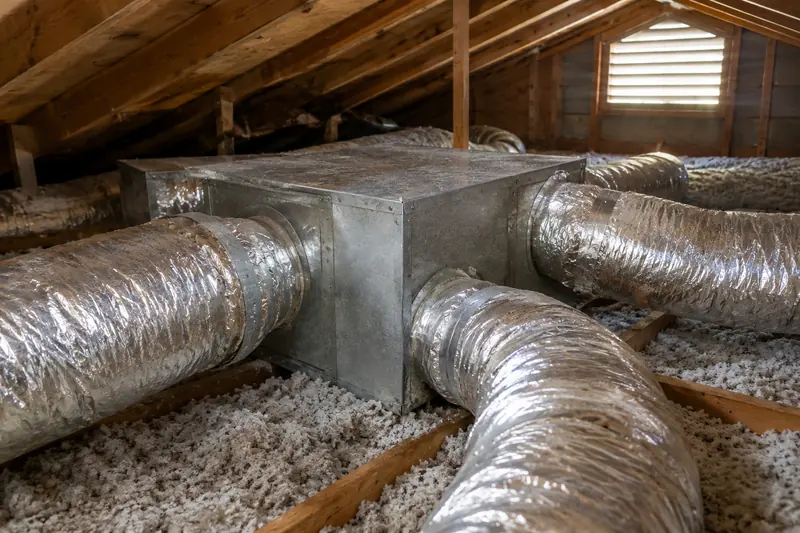
Failing ducts get sealed; if the numbers still won't come down, the code's fallback is to seal all accessible leaks and verify them with a visual inspection and a smoke test. The smoke test pushes non-toxic theatrical smoke into the ducts at 25 pascals and passes when no smoke escapes from the accessible parts, per the code's test procedure on Energy Code Ace. ENERGY STAR says to seal with mastic or metal tape, never cloth duct tape.
Sealing can change pressures around a gas furnace or water heater. ENERGY STAR's contractor checklist calls for a combustion safety test after ducts are sealed, and the DOE Building America guideline says to test before and after. If you're unsure, call a licensed technician.
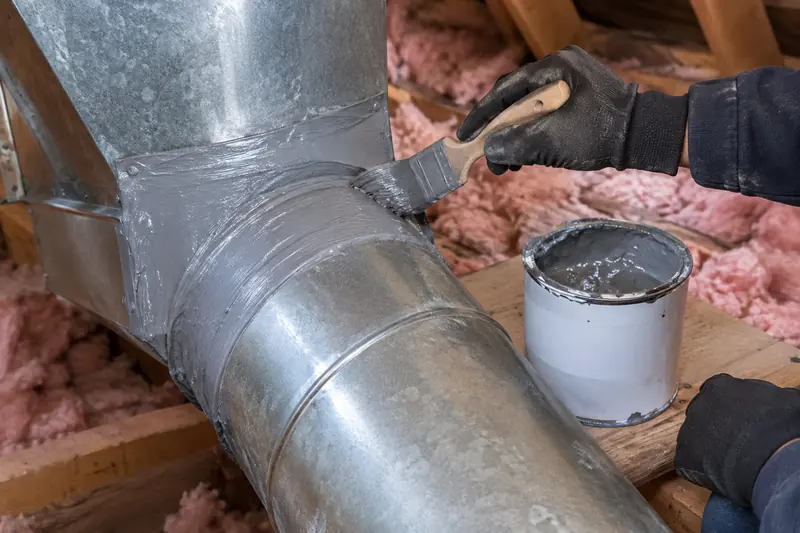
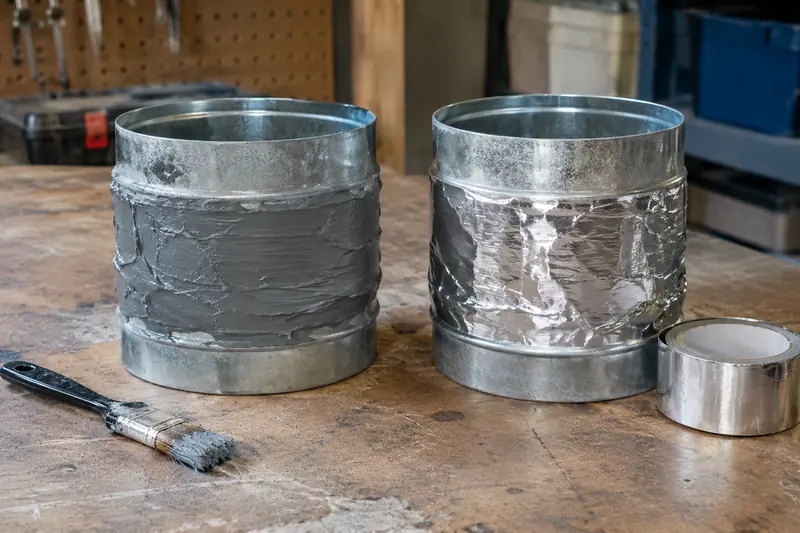
Which duct systems skip the test?
Three kinds of duct systems skip the changeout test: ducts already documented as sealed through verified testing, systems with under 40 linear feet of duct, and ducts built, insulated or sealed with asbestos. The 40-foot call is made "by visual inspection," so the rater looks rather than measures. The code gives no reason for the asbestos exception. Separately, the EPA's single-family upgrade guidelines say not to run duct leakage tests on ductwork with asbestos insulation. Homes built from the 1930s to the 1970s are more likely to have it; leave it alone and have an accredited professional sample it.

Duct testing in numbers
- 10%maximum total duct leakage on a changeoutTitle 24 (Energy Code Ace)
- 7%maximum leakage to outside on a changeoutTitle 24 (Energy Code Ace)
- 5%limit for an entirely new duct systemTitle 24 (Energy Code Ace)
- 20–30%air lost from a typical duct systemENERGY STAR
| Job | Limit | If it can't be met |
|---|---|---|
| Changeout of air handler, condensing unit or coil | 10% total or 7% to outside | Seal all accessible leaks; visual inspection and smoke test |
| Extension adding over 25 ft of duct | 10% total or 7% to outside | Seal all accessible leaks; visual inspection and smoke test |
| Entirely new or complete replacement duct system | 5% | No fallback listed |
| Ducts or equipment in a garage | 6% | Seal all accessible garage leaks; smoke test |
| Under 40 linear feet of duct (changeout) | Exempt from the test | Not applicable |
How this page was put together
This hub is based on the Title 24 Part 6 text for §150.2(b)1D and 1E and Reference Appendix RA3 as reproduced on Energy Code Ace (2025 and 2022 editions), the state Building Standards Bulletin 25-01 (BSC, July 2025), ENERGY STAR's duct sealing page and flyer, the DOE Building America duct sealing guideline (2011), the EPA's 2021 single-family IAQ guidelines and the CSLB's classification list, all read in October 2026. The CEC's own site (energy.ca.gov) could not be reached on the dates checked, so no CEC consumer page is quoted. Rater provider names, fees and local permit costs were left out.
Questions from the field
Is a duct test required if only the outdoor unit is replaced?
Yes. The code lists the outdoor condensing unit of a split system or heat pump among the equipment that triggers duct sealing and verification. The only ways out are the three exceptions: previously verified-sealed ducts, under 40 linear feet of duct, or asbestos ducts.
Does Title 24 apply in Fresno the same as in Sacramento?
The duct sealing rule applies in all climate zones, so Fresno (zone 13) and Sacramento (zone 12) follow the same 10% and 7% limits. Some other changeout checks, such as refrigerant charge verification on air-cooled A/C, apply in zones 2 and 8 through 15, which also covers both.
Can a homeowner run the duct test?
The Title 24 test has to be done by the installer and verified by a state-certified ECC-Rater, so a homeowner's own reading doesn't count toward the permit. Homeowners can still look for the warning signs ENERGY STAR lists, such as rooms that are hard to cool and tangled or kinked flex duct.
What does 25 pascals feel like?
Twenty-five pascals is about 0.1 inch of water column. The code's test procedures use it as the reference pressure for both the total leakage test and the leakage-to-outside test, so every house is measured the same way.
Does a duct test cover the house's own air leaks?
No. A total leakage test pressurizes only the duct system with its registers sealed. The leakage-to-outside version adds a blower door on the house so that leaks into the living space don't count, but it still measures the ducts, not the walls or ceiling.
Are ducts in a garage treated differently?
Yes. When the work touches ducts, a coil, a plenum or the air handler sitting in the garage, the garage rule kicks in no matter how short the run. Its limit is 6%, or every reachable garage leak sealed and smoke-tested.