Sealing Attic Ducts Yourself, Safely
The short of it
Sealing attic ducts yourself is reasonable for reachable joints on ducts with no suspected asbestos, with the system off and the attic cool; anything near the furnace, wiring or gas lines is a contractor's job.
Valley Home Ducts, figures checked against their sources · updated
This page links to PlumbingSupplyAndMore, which has the same owners as Valley Home Ducts. Those links are examples only; no figure here depends on them. About these links
On this page
What to carry away
- On hot summer days attic air can hit 130°F to 140°F, per DOE Building America (2011); no source confirms a safe working temperature, so save the trip for an early morning in a mild month.
- CDC/NIOSH lists confusion, slurred speech, hot dry skin or heavy sweating, and seizures as heat stroke signs: call 911.
- Step only on ceiling joists, truss chords or a board laid across them; the drywall between will not hold a person.
- Per the EPA, homes built in the 1930s through 1970s carry a higher chance of asbestos, duct insulation included; don't touch suspect material.
- ENERGY STAR asks contractors to run a combustion safety test after ducts are sealed; DOE Building America says test before and after.
- The only electrical step for a homeowner is switching the system off at the thermostat and its switch or breaker.
Can you seal attic ducts yourself?
Yes, within a narrow lane: joints you can reach from solid footing, on ducts with no suspected asbestos, with the system switched off, during cool hours. The ENERGY STAR duct sealing flyer frames the homeowner step the same way: seal the leaks and holes you can access with duct sealant (mastic) or metal-backed foil tape, then have a professional check the system.
Everything outside that lane goes to a licensed HVAC contractor. That includes anything inside the furnace or air handler past its filter door, connections at a furnace closet, gas lines, flues, wiring, crushed or disconnected runs that need new fasteners and any joint you can only reach by stretching off the joists. DOE Building America's measure guideline says attic work suits people comfortable in tight spaces who know safe practices for overhead access. If that does not describe you, it is a fine job to hand off.
A small tube of water-based duct sealant (PlumbingSupplyAndMore, same owners as Valley Home Ducts) covers a handful of reachable joints; the mastic vs foil tape page explains which material suits which joint.
When is the attic too hot for sealing ducts?
Most of a Valley summer, and there is no published number that makes it safe. Building America's guideline puts hot-day attic air at 130°F or 140°F with ease, and Fresno's airport averages a 97.7°F high in July (NOAA 1991–2020 normals).
Schedule the work for a mild-season morning, or have it done. Bring water and drink it, tell someone you are going up and when you expect to come down, and keep the trip short. CDC/NIOSH names dehydration and lack of acclimatization among the risk factors for heat illness.
Know the heat stroke signs before you need them. CDC/NIOSH lists confusion or altered mental status, slurred speech, hot and dry skin or profuse sweating, and seizures. If anyone shows them, call 911 for emergency care.
How do you move around an attic safely?
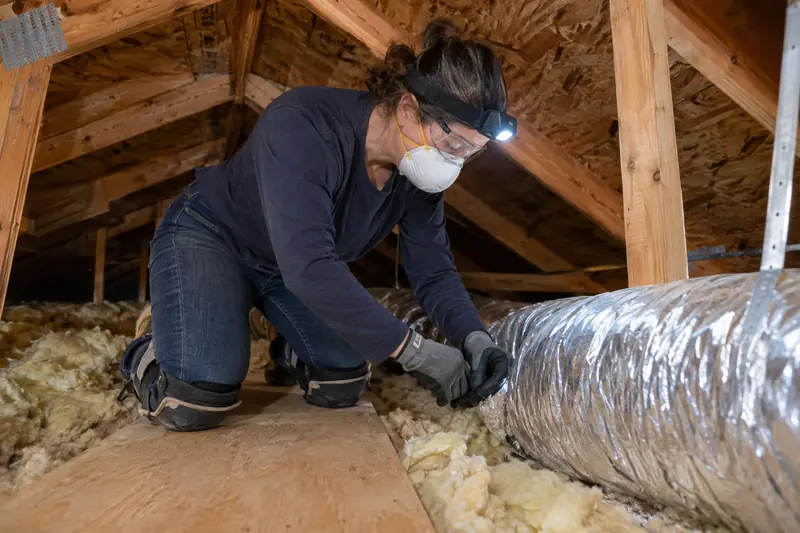
Move only on the ceiling joists or truss bottom chords, or on a sturdy board laid across them, and never step between them. DOE Building America warns that insulation hides solid footing and that a misplaced foot damages the ceiling drywall below; the drywall will not hold you.
Look up as well as down. The same guideline says roofing nails usually poke through the underside of the roof deck, so wear a hard hat or bump cap where headroom is low. For fiberglass and dust, it lists gloves, a dust mask, safety glasses and protective clothing; long sleeves and a respirator rated for dust are a sensible step up.
DOE's guideline also flags exposed or knob-and-tube wiring, which needs an electrician's evaluation, and recessed can lights that are not rated for contact with insulation. Before touching any duct, switch the system off at the thermostat and at its switch or breaker; that is the only electrical step a homeowner takes, and no one but a technician should open the equipment past its filter door.
What if the ducts might contain asbestos?
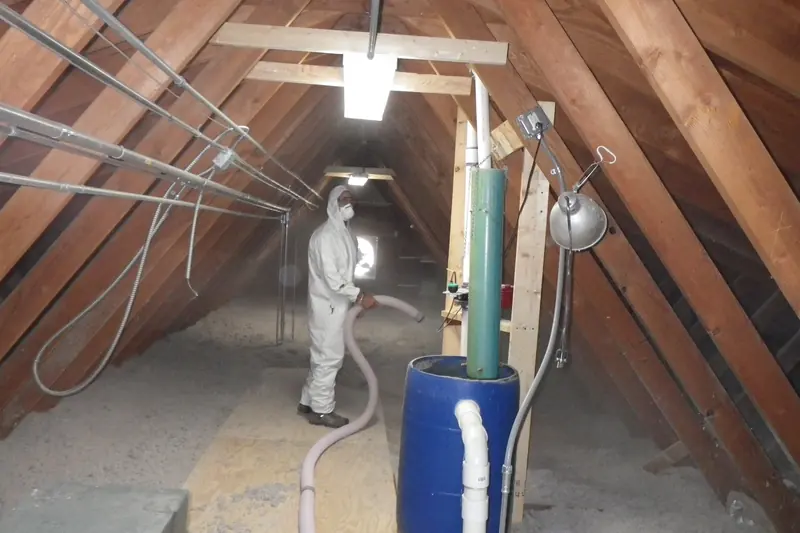
Leave them alone and call an accredited asbestos professional to take samples. The EPA's asbestos page says that if you suspect a material contains asbestos, don't touch it, and that a trained, accredited professional should do the sampling. Material in good condition, the EPA says, is best left alone.
The EPA's Energy Savings Plus Health guidelines (2021) list furnace duct insulation and transite (cement and asbestos) HVAC ducts among the materials to watch for in older homes. They also say not to run duct leakage tests on ductwork with asbestos insulation. Title 24 also exempts ducts built, insulated or sealed with asbestos from its changeout sealing rule.
So: no cutting, peeling, sanding, sealing over or sampling it yourself. If you're unsure, call a licensed technician.
Why does sealing attic ducts call for a combustion safety test?
Because tighter ducts change air pressures in the house, and in a home with a gas furnace or water heater that can pull exhaust back indoors. ENERGY STAR's word for it is backdrafting: exhaust from burning fuel pulled back indoors. Its flyer tells contractors to check for it and run a combustion safety test after ducts are sealed. DOE Building America goes further: test both before and after.
The EPA's 2021 guidelines describe the professional version: testing vented appliances under worst-case depressurization, including a combustion appliance zone (CAZ) inspection to the ANSI/BPI-1200 standard, and checking for CO alarms. That is a job for a qualified pro with instruments, not a homeowner task. Put CO alarms on every level of the house.
Smell gas or hear a CO alarm? Get out of the building first. Touch no light switches and make no phone calls indoors; call 911 or the gas utility after you are outside. Never adjust gas valves, burners, flues or gas lines, and never relight anything yourself.
Which attic duct joints are safe to seal?
Joints you can see, reach and coat from solid footing, on sheet metal or duct board that is not suspect: branch collars where a round duct meets a trunk, boots behind ceiling registers, and seams along a trunk. Clean off dust first, coat generously, and use fiber mesh in the mastic on gaps wider than about 1/8 inch, as DOE Building America describes. On insulated flex, the seal belongs on the inner core at the collar, not on the outer jacket.
Leave the air handler and furnace connections, return ducts in a furnace closet, and anything disconnected or crushed for the contractor, along with a duct leakage test afterward. Supply-house tape listings (PlumbingSupplyAndMore, same owners as Valley Home Ducts) include UL 181 foil tape for straight seams; check for the UL mark. Re-cover joints with insulation once the mastic has set; the R-value page gives R-8 as the Valley target.
| Task | Homeowner? | Who instead |
|---|---|---|
| Sealing reachable joints on non-suspect ducts | Yes, system off, cool hours | A licensed HVAC contractor if in doubt |
| Suspected asbestos wrap, tape or transite duct | No | Accredited asbestos professional |
| Air handler or furnace cabinet, furnace closet | No | Licensed HVAC contractor |
| Disconnected, crushed or unsupported runs | No | Licensed HVAC contractor |
| Combustion safety (CAZ) test | No | Qualified professional |
| Knob-and-tube or exposed wiring | No | Electrician |
- 130–140°Fattic temperatures on hot summer daysDOE Building America
- 1930s–1970sera of homes more likely to have asbestosEPA
- 911the call for heat stroke signsCDC/NIOSH
- 2combustion safety tests: before and after sealingDOE Building America
The sealing and insulation hub sets this page beside the other methods, and the attic ducts hub explains why Valley attics run so hot.
How this page was put together
Drawn from DOE Building America's December 2011 measure guideline on sealing and insulating existing ducts (worker safety, footing, PPE, combustion testing), the ENERGY STAR duct sealing flyer, the EPA asbestos page and its May 2021 Energy Savings Plus Health guidelines, CDC/NIOSH heat stress pages (March 2026), NOAA normals and the 2025 Title 24 changeout text, all read in October 2026. Left out: any "safe" attic temperature (no primary source sets one), OSHA figures (not read), and any step inside equipment cabinets.
Questions from the field
What time of day is best for attic duct work?
A mild-season morning. Hot-day attics can pass 130°F, by DOE's account, and no source sets a safe working temperature. Keep trips short and have someone nearby.
Is it safe to step between joists if you're careful?
No. Drywall will not hold your weight, and DOE Building America notes insulation hides where the solid footing is. Lay a board across the joists and stay on it.
What mask should I wear around fiberglass?
DOE Building America lists a dust mask with gloves, safety glasses and protective clothing. A fitted respirator rated for dust gives more protection; it does not make suspect asbestos safe to disturb.
Should the AC be off during duct sealing?
Yes. Switch it off at the thermostat and at its switch or breaker before touching ducts, and leave the cabinet closed. Turn it back on only when you are out of the attic and the sealant has set as the label directs.
My house was built in 1965. Can I seal the ducts?
Not until any suspect wrap, tape or duct material has been sampled by an accredited asbestos professional. The EPA flags houses built in that 1930s–1970s window as more likely to contain it.
Do I need a combustion test if my furnace is electric?
Backdrafting involves fuel-burning appliances. If the house has a gas water heater or other gas appliance, ask a qualified pro whether testing is needed after sealing.
What if a CO alarm goes off during attic work?
Climb down and get out of the house before doing anything else, without flipping switches or making calls indoors. Once outdoors, phone 911 or the gas utility.