Title 24 Rules When You Replace an A/C
The short of it
A Title 24 HVAC changeout, replacing an air handler, condensing unit or coil, requires sealing the connected ducts to 10% total leakage or 7% to outside, verified by a state-certified rater.
Valley Home Ducts, figures checked against their sources · updated
On this page
What to carry away
- Title 24 §150.2(b)1E applies in all climate zones when an air handler, outdoor condensing unit or heating or cooling coil is installed or replaced (Energy Code Ace).
- The connected ducts must test at 10% or less total leakage or 7% or less to outside; failing both, all accessible leaks are sealed and checked with a smoke test.
- Exceptions: ducts documented as previously sealed, systems under 40 linear feet of duct, and asbestos ducts.
- More than 25 feet of new or replacement duct brings in the new-duct rules; a complete replacement duct system must reach 5%.
- Permit applications submitted on or after January 1, 2026 fall under the 2025 Energy Code (BSC Bulletin 25-01).
- In climate zones 12 and 13, air-cooled A/C changeouts also need refrigerant charge and airflow verification, with a 300 CFM per ton minimum.
A changeout is the one moment the state looks at your ductwork. In Stockton, Modesto and Sacramento (climate zone 12) and Fresno (zone 13), ducts often sit in an attic, and the code uses the swap to keep a new system off leaky ducts.
What counts as a changeout under Title 24?
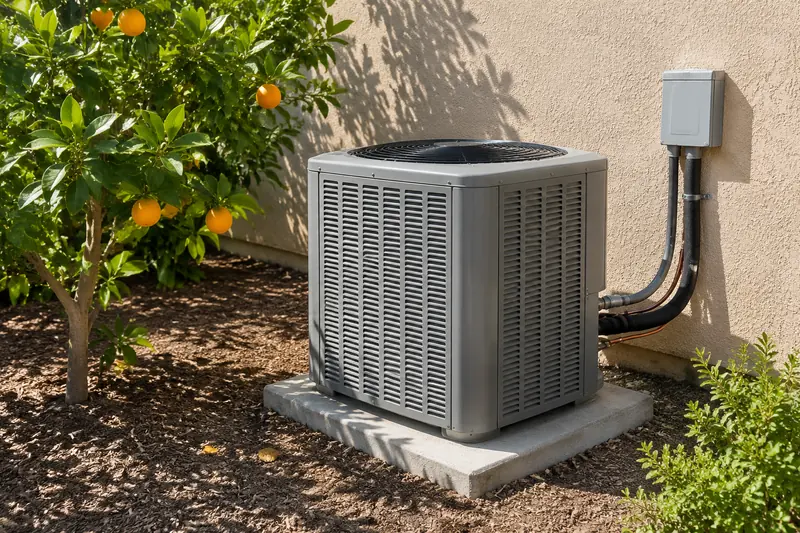
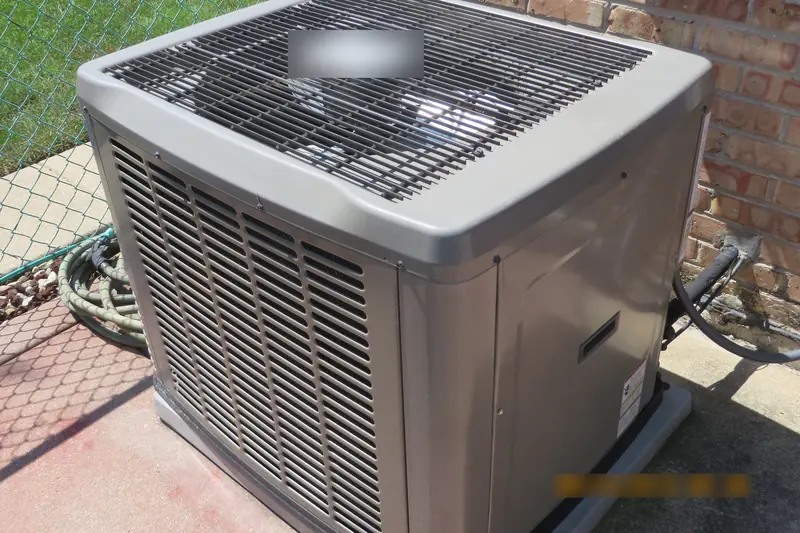
Under Title 24, a changeout is installing or replacing space-conditioning equipment in an existing home: the indoor air handler, a split system's or heat pump's outdoor unit, or a coil for cooling or heating. The code text on Energy Code Ace lists those three items, and the rule applies in all climate zones. In a typical forced-air house, the air handler is the furnace or fan coil that holds the blower.
Swapping only the outdoor unit still counts. So does a heat pump replacing an old A/C and furnace pair. A thermostat swap or a filter change does not, because neither is space-conditioning equipment in the code's list.
What must happen to the ducts on a Title 24 changeout?
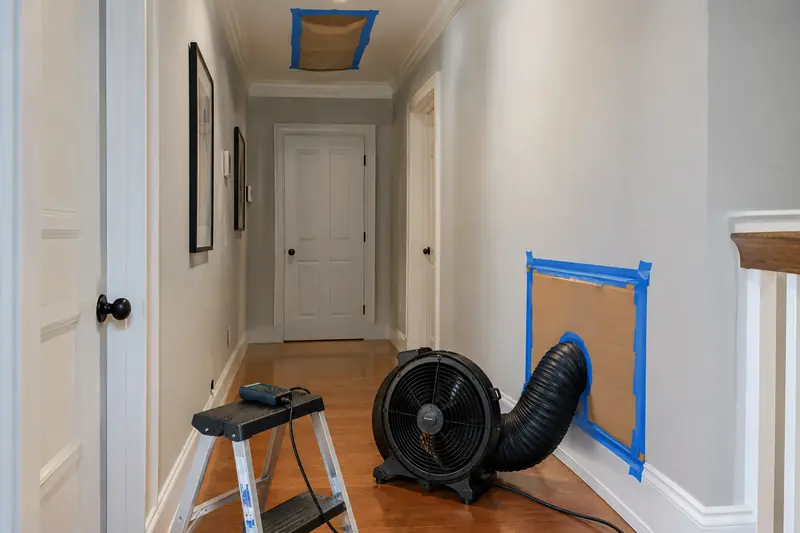
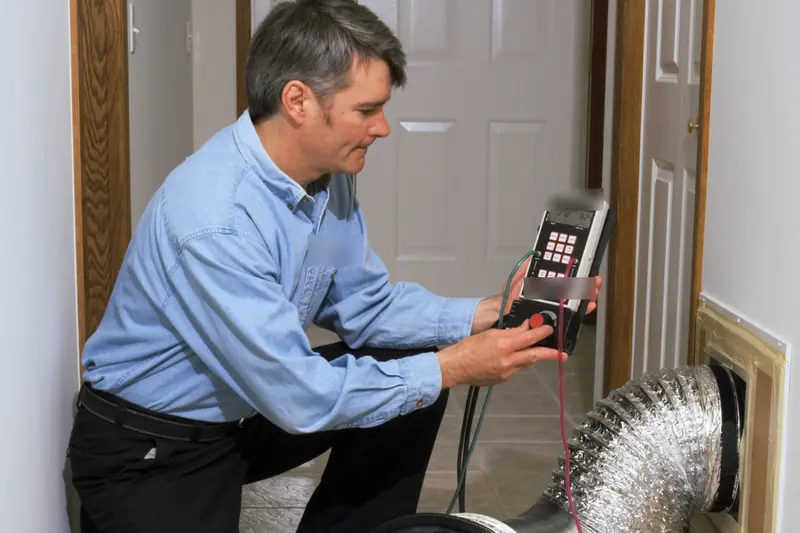
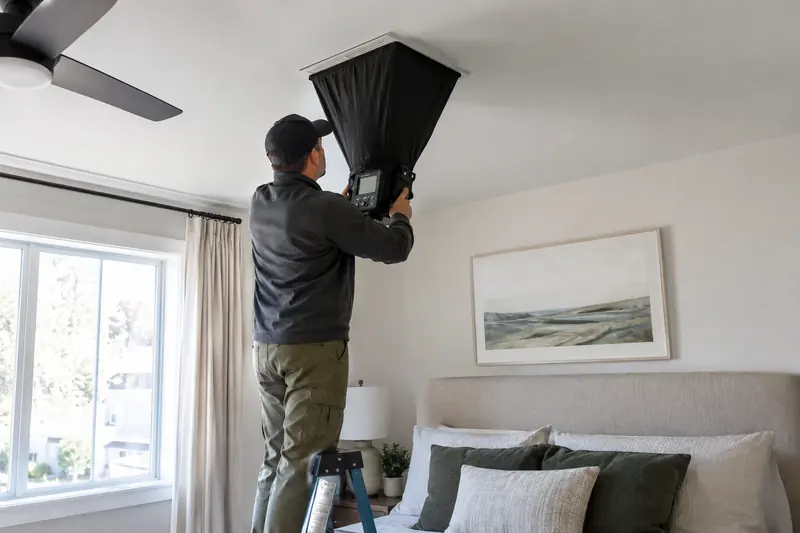
The duct system connected to the new equipment must be sealed and then verified by field verification and diagnostic testing. There are three ways to pass:
- Total leakage of 10% or less of system air handler airflow.
- Leakage to outside of 7% or less of system air handler airflow.
- If neither can be met, seal all accessible leaks and verify them by visual inspection and a smoke test.
The smoke test procedure on Energy Code Ace holds the ducts at 25 pascals while non-toxic smoke is injected, and it passes only when no visible smoke leaves the accessible parts of the system. How the numbered tests work is laid out on the duct leakage test page.
Ducts or equipment in a garage get stricter treatment. When any altered duct, coil, plenum or air handler sits in the garage, length stops mattering: 6% or less of air handler airflow, or all accessible garage leaks sealed and smoke-tested (Energy Code Ace).
Which Title 24 exceptions apply?
Only three situations exempt a changeout from duct sealing and testing. Ducts already documented as sealed through field verification and diagnostic testing are exempt; so are duct systems with less than 40 linear feet, as determined by visual inspection; and so are existing ducts constructed, insulated or sealed with asbestos.
The asbestos exception exists for a reason. The EPA's single-family upgrade protocols say homes built between the 1930s and 1970s are more likely to have asbestos materials, including transite (cement) ducts and furnace duct insulation. Don't touch, cut or seal over suspect wrap; an accredited asbestos professional takes the samples. If you're unsure, call a licensed technician.
A separate number causes confusion: 25 feet. Install over 25 feet of new or replacement duct and §150.2(b)1D takes over. A whole new duct system, or a complete replacement, has to hit 5% or less, and an extended system uses the same 10%, 7% or smoke-test choices (Energy Code Ace). The 40-foot exception is about the size of the existing system on a changeout; the 25-foot trigger is about how much new duct goes in. They are different rules.
New ducts in an attic, crawlspace or garage also have to meet the insulation table: R-8 in climate zones 12 and 13, which covers all four Valley cities. Detail on the duct insulation page.
Which code edition covers your permit?
The code edition is set by the date the permit application was submitted. The state's Building Standards Bulletin 25-01 says applications submitted on or after January 1, 2026 must comply with the 2025 California Building Standards Code, while applications received on or before December 31, 2025 stay under the 2022 code.
For ducts, the two editions match on substance: the same trigger, the same 10% and 7% limits, the same smoke-test fallback and the same three exceptions, per the 2022 text. The visible change is the verifier's title: the 2025 code says ECC-Rater, the 2022 code says HERS Rater. Pull a permit for a changeout as standard practice, and keep its number with your records.
What else gets checked on a Title 24 A/C changeout?
When refrigerant-containing parts are installed or replaced, such as the compressor, condensing coil, evaporator coil, metering device or refrigerant piping, §150.2(b)1F adds airflow and refrigerant charge verification. The code text applies it to air-cooled air conditioners in climate zones 2 and 8 through 15, which includes zones 12 and 13, and to air-source heat pumps in every zone.
The airflow minimum is 300 CFM per ton of nominal cooling capacity, or 250 for small-duct high-velocity systems. Every thermostat on the system must be replaced with a setback thermostat. Charge is checked by the installer and the ECC-Rater using the code's standard procedure, or by the installer's weigh-in method. Refrigerant work belongs to the contractor; homeowners shouldn't open the equipment.
That is a floor. DOE Building America calls 350 CFM per ton a rule of thumb and says 400 to 450 is often used in dry climates like the Valley; the manufacturer's spec governs.
How do you read a changeout bid against the rules?
A bid that follows Title 24 names the permit, the duct test and the rater verification as line items. ENERGY STAR's quality installation page suggests asking the contractor to make sure the new system's airflow meets the manufacturer's specifications. The questions for a duct contractor page has a longer list.
Ask which compliance path the contractor expects, and what happens if the ducts test high: more sealing, partial replacement, or the smoke-test fallback. With gas appliances in the home, the DOE Building America guideline says combustion safety testing belongs both before and after duct sealing; put it in the bid. Check the contractor's license on the CSLB license lookup, which searches by license number, business name or personnel name.
Changeout numbers
- 10%total duct leakage limitTitle 24 (Energy Code Ace)
- 7%leakage to outside limitTitle 24 (Energy Code Ace)
- 40 ftbelow this, the duct test is exemptTitle 24 (Energy Code Ace)
- 300 CFMminimum airflow per ton on refrigerant changeoutsTitle 24 (Energy Code Ace)
- Jan 1, 2026permit date for the 2025 codeBSC Bulletin 25-01
| Work | Duct rule | Other checks |
|---|---|---|
| Replace outdoor condensing unit (A/C) | Seal and test: 10% total or 7% to outside | Refrigerant charge and airflow (zones 2, 8–15); setback thermostat |
| Replace furnace or fan coil (air handler) | Seal and test: 10% total or 7% to outside | Garage rule if the unit sits in the garage |
| Replace with an air-source heat pump | Seal and test: 10% total or 7% to outside | Refrigerant charge and airflow in all zones |
| Add more than 25 ft of new duct | New-duct rules; complete new system 5% | R-8 insulation in zones 12 and 13 |
| System with under 40 linear ft of duct | Exempt from the changeout test | Other changeout checks still apply |
How this page was put together
Sources: Title 24 Part 6 §150.2(b)1D, 1E and 1F and Reference Appendix RA3.1.4.3.5, read in both the 2025 and 2022 editions on Energy Code Ace; Building Standards Bulletin 25-01 (July 2025); the EPA's 2021 single-family protocols; ENERGY STAR's quality installation page; DOE Building America's duct sealing guideline; and the CSLB license lookup, all read in October 2026. The CEC's consumer changeout page could not be reached, so nothing here is quoted from it. Permit fees, local building-department practice and the fan watt-draw rule for complete system replacements were left out.
Questions from the field
Does replacing only the furnace trigger Title 24 duct testing?
In a gas forced-air system the furnace houses the blower, so it serves as the air handler, and replacing the air handler is one of the listed triggers. The connected ducts then need sealing and verification unless one of the three exceptions applies.
Is a new heat pump a changeout?
Yes. Replacing an A/C with a heat pump replaces the outdoor condensing unit, and air-source heat pumps also need refrigerant charge and airflow verification in every climate zone.
Can the contractor skip the duct test if my ducts look fine?
No. Looking is only how the 40-linear-foot exception is judged. Otherwise, a passing test or the full seal-and-smoke-test path is required, and a state-certified ECC-Rater verifies it.
Do I have to replace my ducts on a changeout?
No. The rule is sealing and testing the existing ducts. Replacement is a separate choice; past 25 feet of fresh duct, the stricter new-duct section governs.
Which code applies to a contract signed in December 2025 but permitted in January 2026?
The permit application date decides it. An application submitted on or after January 1, 2026 falls under the 2025 code, though the duct rules are substantively the same.
Keep reading