Return Air and Why It Matters
The short of it
Return air is the half of the duct system that carries room air back to the air handler, and ENERGY STAR warns that many systems have return ducts that are too small.
Valley Home Ducts, figures checked against their sources · updated
This page links to PlumbingSupplyAndMore, which has the same owners as Valley Home Ducts. Those links are examples only; no figure here depends on them. About these links
On this page
What to carry away
- ENERGY STAR's duct sealing flyer says "Many systems have air return ducts that are too small."
- PNNL's Building America Solution Center says return air needs a clear path back from every room with a supply outlet.
- A bedroom with its door shut is typically pushed to positive pressure, per PNNL's transfer grille guide.
- PNNL cites an ENERGY STAR target of no more than 3 pascals of pressure difference for rooms supplied with under 150 CFM.
- DOE Building America (2011) notes return leaks can pull in 130°F attic air.
- EPA suggests a MERV 13 filter or the highest rating your fan and filter slot can handle.
What does return air do?
Return air closes the loop: every bit of air a supply register pushes into a room has to travel back to the air handler to be cooled or heated again. PNNL's transfer grille guide puts it simply: "The return air must have a clear path back to the air handler from every room that has a supply outlet."
A common layout has one or two large return grilles in a hallway or ceiling, with supply registers in every room. That works when the doors are open. When they close, the air has to find another way, and it doesn't ask permission.
How do you know the return air is too small?
The usual signs are rooms that are hard to cool, drafts and temperature differences between rooms, and a return grille that roars while bedroom doors push shut as the fan starts. ENERGY STAR's flyer advises contractors to "Evaluate the system's supply and return air balance," and adds that many systems have undersized return ducts.
PNNL's pressure-balancing guide for existing homes says poor circulation is sometimes "due to the lack of a properly sized (low pressure) return air path back to the air handler." A starved return also raises the pressure the blower works against, which is the same problem the Manual D page describes on the supply side.
Confirming it takes instruments. A contractor or rater can measure room pressures with doors closed and the total airflow at the air handler. Ask for those numbers before anyone proposes a bigger system.
Why do closed bedroom doors matter for return air?
A closed door traps supply air in the bedroom, so the room pressurizes and the rest of the house is pulled negative. PNNL's guide says "The bedroom will typically be pressurized (positive) when the doors are closed," and that inadequate return paths "can cause pressure imbalances from room to room."
Those imbalances cost comfort and money. According to PNNL's ducted returns page, they can cause drafts and temperature differences and "can also cause the furnace and air conditioning equipment to work harder than necessary." The same page cites an ENERGY STAR target: rooms supplied with less than 150 CFM "should not be pressurized or depressurized by more than 3 Pascals."
Pressure also pushes air through cracks. PNNL warns that leaky return pathways "will draw air from unintended places in the house." In a house with attic ducts, a leaky return can pull from the attic itself: the DOE Building America duct guideline notes "return leaks can draw in 130°F attic air" on hot days. The leaky duct signs page covers what that feels like indoors.
Return air figures
- 3 Pamaximum room pressure difference, rooms under 150 CFM (ENERGY STAR target)PNNL BASC
- 130°Fattic air a leaky return can draw in on hot daysDOE Building America (2011)
- MERV 13filter EPA suggests, or the highest your system can takeEPA
- 3 monthslongest gap between filter changesENERGY STAR
What fixes help a starved return?
The fixes give closed rooms a path back: door undercuts, transfer grilles, jumper ducts or dedicated ducted returns, sized by a contractor for the room's airflow. PNNL's ducted returns guide recommends ducted returns "or a combination of ducted returns, transfer grilles, jump ducts, and/or door undercuts," and its pressure-balancing guide starts by checking whether bedrooms have "adequate door undercuts."
| Fix | How it works | Who sizes and installs it |
|---|---|---|
| Door undercut | A gap under the door lets air leave the room | Simple, but a contractor can say whether the gap is enough |
| Transfer grille | A grille through the wall or above the door to the hallway | Contractor or carpenter, sized to the room's airflow |
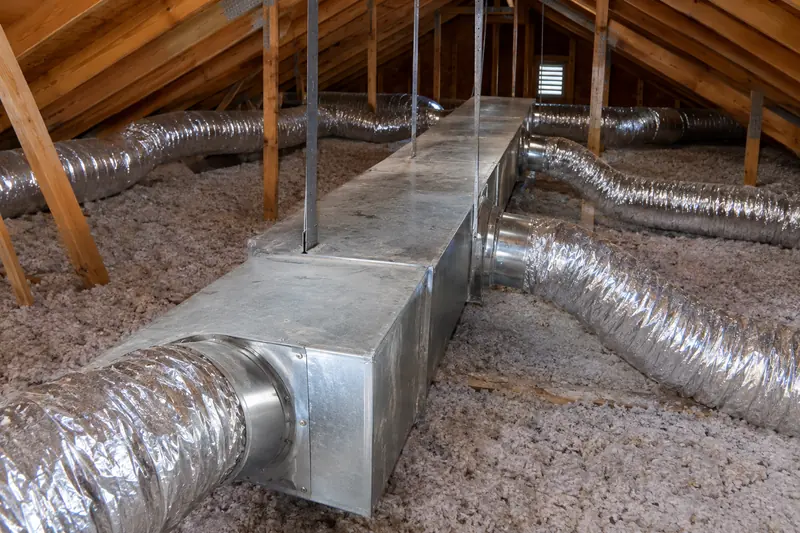
| Jumper (jump) duct | A short duct through the attic from a bedroom ceiling to the hall | HVAC contractor; must be sealed and insulated in the attic |
| Ducted return | Its own return duct from the room to the air handler | HVAC contractor, as part of a duct design |
| Larger central return | More return grille and duct area at the hall | HVAC contractor, after measuring airflow |
Sizing any of these is design work. A return path that is too small just moves the whoosh to a new spot. A jumper duct in a Valley attic is also another duct in 130°F air, so it needs the same sealing and R-8 insulation that Title 24 requires for new attic ducts in climate zones 12 and 13; the insulation page explains the rule.
What a homeowner can do is simpler: keep return grilles clear of furniture and drapes, change the filter on time, and replace a broken grille with one of the same size. A supply house's listings of return grilles show the face sizes and styles available; picking a size for a new return is the contractor's call.
Where should the filter go?
The filter goes wherever the system was designed to hold it: a slot at the air handler or a filter grille at the return, with the airflow arrow pointing toward the equipment. ENERGY STAR says to "Check your filter every month" and to change it every 3 months at a minimum. Switch the system off at the thermostat before you pull a filter, and never open the cabinet beyond the filter door.
Filter rating interacts with return size. EPA suggests "at least a MERV 13 rating, or as high a rating as your system fan and filter slot can accommodate." EPA's air cleaner technical summary cautions that existing systems "may not have enough fan or motor capacity to accommodate higher pressure drop filters." That matters most where the return is already small, so ask a contractor to measure airflow before and after an upgrade. The MERV and wildfire smoke page covers smoke-season choices.
For entirely new or replacement systems, current Title 24 requires MERV 13 filters on systems that move air through more than 10 feet of duct, in a 2-inch depth or a 1-inch filter sized to a face velocity of 150 feet per minute or less.
Can a starved return affect gas appliances?
It can. ENERGY STAR's flyer warns that leaky ducts can cause "backdrafting," where combustion gases are drawn back into the living space, and pressure differences from closed doors and leaky returns work on the same air. If a furnace or water heater shares a closet or garage with return ducts, ask for a combustion safety test before and after any return or sealing work, and make sure CO alarms are installed on every level of the house.
On a CO alarm or any smell of gas, everyone goes outside first; flip no switches and use no phone indoors, and ring 911 or the utility once you're out. Don't touch gas valves, burners or flues. If you're unsure, call a licensed technician.
How this page was put together
This page draws on ENERGY STAR's duct sealing flyer and heating and cooling page, PNNL's Building America Solution Center pages on transfer grilles, ducted returns and pressure balancing in existing homes, DOE's Building America sealing-and-insulating guideline (2011), EPA's MERV page and Residential Air Cleaners technical summary (2018), and Title 24 §150.0(m)12 from Energy Code Ace, each read in October 2026. Left out: return grille sizing rules of thumb and duct-size charts, which belong in a design for the specific house, and prices.
Questions from the field
Should I leave bedroom doors open at night?
Open doors give air a way back, so they often help a house with one central return. If you want doors closed, ask a contractor to measure room pressures and suggest a return path.
Is a whistling return grille a problem?
Noise at the return usually means air is moving fast through too little grille or duct area, or the filter is clogged. Check the filter first, then ask for an airflow measurement.
Can I add a return vent myself?
Cutting a new return into the duct system changes the design and, in an attic, means more duct to seal and insulate. It's a contractor's job; a homeowner can replace a damaged grille with one of the same size.
Do undercut doors really help?
PNNL lists door undercuts among the acceptable return paths, alongside transfer grilles and jump ducts. Whether a given gap is enough depends on the room's airflow.
Why does my bedroom door slam when the air comes on?
The room is being pushed to positive pressure with too little path back to the return. That's a classic sign the room needs a transfer grille, jumper duct or ducted return.
Can a thicker filter fix a weak return?
A deeper filter in a larger housing can lower resistance, but it won't fix a return duct that is too small. Ask a contractor to measure total airflow first.
Keep reading