Replacing Ductwork or Repairing It
The short of it
Replacing ductwork makes sense when a test and inspection show crushed, torn or disconnected runs that sealing can't fix; in California, a complete new duct system must then test at 5% leakage or less.
Valley Home Ducts, figures checked against their sources · updated
This page links to Central Plumbing HVAC, PlumbingSupplyAndMore, which have the same owners as Valley Home Ducts. Those links are examples only; no figure here depends on them. About these links
On this page
What to carry away
- Title 24 applies its new-duct rules when more than 25 feet of new or replacement duct is installed.
- A whole new duct system may leak no more than 5% of air handler airflow; an extended one has to reach 10% total or 7% to outside.
- New ducts in attics need R-8 insulation in climate zones 12 and 13 (Stockton, Modesto, Sacramento, Fresno).
- DOE Building America (2011) says older homes often lose 30–50% of system airflow to duct leakage.
- Aerosol sealing cannot close disconnected ducts or large holes, per DOE's Building America guideline.
- California's CSLB licenses HVAC contractors under its C-20 classification, which covers ducts as part of the system.
When should ductwork be replaced?
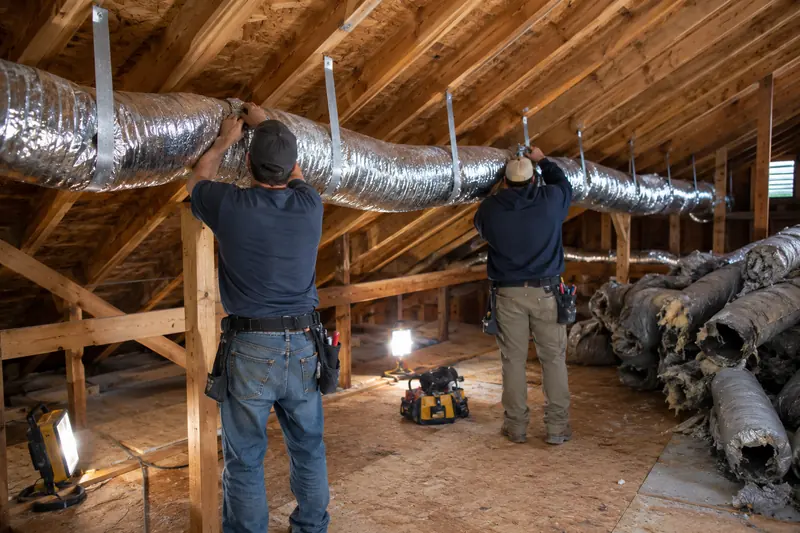
Ductwork is due for replacement when an inspection and leakage test show damage that sealing can't reach: runs that are crushed, torn open, disconnected, chewed by animals, or so tangled that no amount of mastic will restore airflow. ENERGY STAR's duct sealing page lists "tangled or kinked flexible ducts" among the signs of trouble, and PNNL links sagging or pinched flex to "minimal air flow to a terminal, excessive noise, or fan burnout."
An old metal trunk with sealed joints can be in better shape than a much newer flex run that someone stepped on. What matters is what a leakage test, an airflow reading and a look in the attic show.
Leakage can be severe in older houses. The DOE Building America measure guideline says "In older homes, it is not uncommon for duct leakage to account for 30%-50% of the total system air flow."
Design problems are another reason. If rooms are starved because the ducts were undersized, or a bedroom has no return path, a new layout drawn with Manual D may do more than patching the old one.
When does repairing ductwork make more sense?
Repair makes sense when the ducts are intact and reasonably laid out but leaky, which is the common case. ENERGY STAR advises sealing with "mastic sealant or metal tape" and warns "Never use duct tape, as it is not long-lasting." The sealing and insulation row covers the materials.
Aerosol sealing from the inside is another repair route for ducts you can't reach. DOE's guideline says the method was developed at Lawrence Berkeley National Laboratory in the 1990s, and notes it won't close big holes or ducts that have come apart. Those need hands in the attic first. The aerosol sealing page explains the trade-offs.
Repair has a limit set by the test. A sealed system that still can't meet the changeout targets, or still leaves rooms short of air, is a candidate for partial or full replacement. Ask the contractor to show the before-and-after numbers either way.
| What you find | Usually points to | Why |
|---|---|---|
| Leaky but intact joints and seams | Repair: mastic or UL 181 foil tape | ENERGY STAR's sealing advice |
| Leaks in ducts you can't reach | Repair: aerosol sealing may help | DOE guideline: works on small gaps only |
| Disconnected or torn runs | Reconnect or replace those runs | Aerosol can't seal disconnects or large holes |
| Crushed, sagging or looped flex | Re-hang or replace to ADC rules | PNNL: low airflow, noise, fan strain |
| Starved rooms, no return path | Redesign with Manual D | Sizing problem, not a leak |
| Suspected asbestos wrap or tape | Leave alone; accredited professional | EPA asbestos guidance |
What does Title 24 require when replacing ductwork?
Title 24 §150.2(b)1D kicks in past the 25-foot mark for new or replacement duct. At that point a brand-new system, or one replaced from end to end, has to test at 5% or less of system air handler airflow. An existing system that is extended must reach 10% total leakage or 7% leakage to outside; if neither is possible, all accessible leaks are sealed and verified by visual inspection and a smoke test by a certified ECC Rater.
Other rules ride along:
- Insulation: new ducts in unconditioned space need R-8 in climate zones 12 and 13, which take in all four of the Valley's big cities. The duct insulation page explains the values.
- Garages: ducts or equipment in a garage carry a 6% limit, or sealing of every accessible garage leak, whatever the duct length.
- Filters: whole new or fully replaced systems fall under the §150.0(m)12 filter rule, which calls for MERV 13 filters on systems moving air through more than 10 feet of duct.
- Equipment changeouts: replacing the air handler, coil or outdoor unit as well brings in §150.2(b)1E's 10% or 7% targets for the connected ducts.
Which code edition applies depends on the permit date. California's building standards bulletin 25-01 says applications submitted on or after January 1, 2026, fall under the 2025 code, and the duct rules are substantively the same as in 2022. Pulling a permit is the standard route, and a state-certified ECC-Rater (the title that replaced HERS Rater) does the verification. The Title 24 changeout page walks through the visit.
What should a ductwork replacement include?
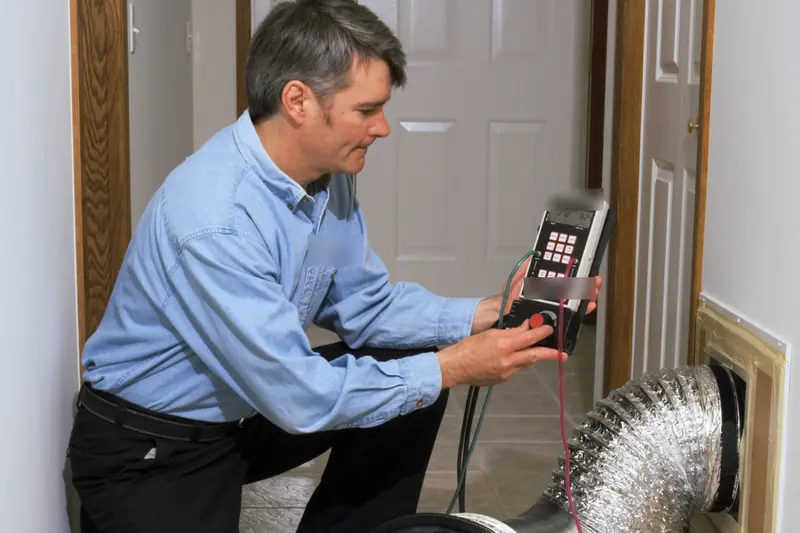
A full replacement should include a load calculation, a duct design, sealed and insulated ducts, a leakage test, an airflow measurement and the rater's paperwork.
- A Manual J load and Manual D layout, so the new ducts match the house rather than the old mistakes.
- A location plan. PNNL's buried-duct guide calls conditioned space "the best place to locate the duct system," and says buried ducts can work in dry climates. Ask whether either is possible.
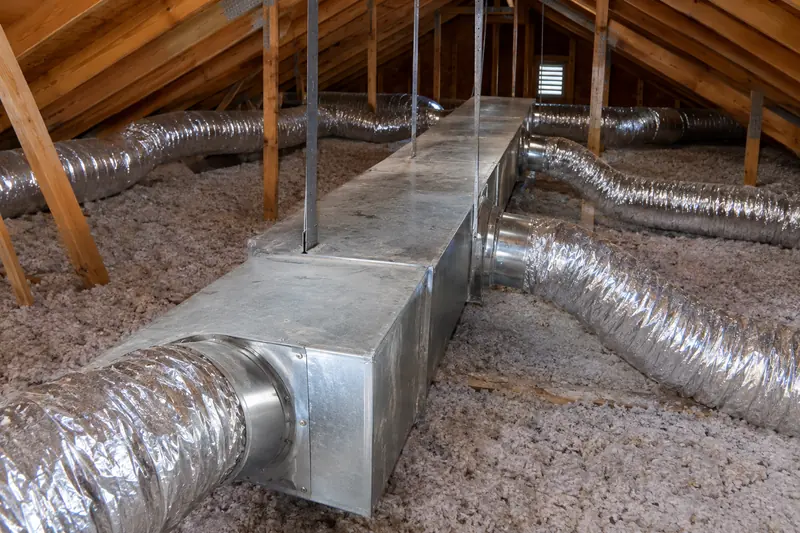
- Mastic-sealed joints, flex installed to the Air Duct Council's support and stretch rules (see flex vs sheet metal), and R-8 insulation.
- A return path for every closed room.
- The leakage test result, airflow readings, a balance report and the rater's certificate.
Gas appliances need a check too. Tightening a duct system changes house pressures, and ENERGY STAR's flyer calls for a combustion safety test after ducts are sealed; DOE's guideline says before and after. Keep a CO alarm on every floor. If one sounds or you notice a gas smell, the first move is out the door: no switches or phones inside, and you phone 911 or the gas company once everyone is outside.
If you're unsure, call a licensed technician.
Old ducts can hide asbestos. EPA's healthy-upgrade guidelines flag houses from roughly the 1930s through the 1970s as more likely to have it, including furnace duct insulation and transite ducts, and advises against leakage tests on ducts with asbestos insulation. EPA's asbestos page says to leave suspect material alone and have an accredited professional sample it before any tear-out.
How long does replacing ductwork take?
No agency publishes a standard schedule, so the honest answer is: ask for one in writing. A useful schedule covers the tear-out, the new install, the sealing, any asbestos sampling or abatement first, and the ECC-Rater's test visit that verifies the work.
Attics can reach 130°F or 140°F on hot days, according to DOE's guideline, so cooler months make the work safer for the crew. Before you go up to look at old ducts yourself, go early in the morning in a cooler month, step only on joists, watch for roofing nails, wear gloves, sleeves, glasses and a mask, and tell someone; the attic safety page covers heat illness.
Check the license before you sign. California's CSLB license lookup searches by license number, business name or personnel name. In Sacramento, SMUD's Seal and Insulate program lists up to $3,000 for work that can include installing and sealing new ductwork, through its program contractors; check the page for current funding.
For a sense of how a company describes this kind of work, Central Plumbing HVAC's air-conditioning service page (Central Plumbing HVAC, same owners as Valley Home Ducts) is one example. It works in Bucks and Montgomery County, Pennsylvania, not the Valley: in the Valley, look for a CSLB-licensed contractor near you. A supply house's duct pipe and fittings listings also show the round sizes a contractor works with.
Replacement figures
- 25 ftnew or replacement duct that brings in Title 24 new-duct rulesTitle 24 via Energy Code Ace
- 5%maximum leakage, entirely new duct systemTitle 24 via Energy Code Ace
- 30–50%duct leakage not uncommon in older homesDOE Building America (2011)
- $3,000SMUD Seal and Insulate maximum, Sacramento onlySMUD
How this page was put together
This page draws on the Energy Code Ace text of Title 24 §150.2(b)1D, §150.2(b)1E and §150.0(m)12 (2025 edition), bulletin 25-01 from California's building standards agency, DOE's Building America duct guideline (2011), two ENERGY STAR duct sealing documents, PNNL's buried-duct and flex pages, EPA's asbestos pages, CSLB's license pages and SMUD's Seal and Insulate page, read in October 2026. Left out: replacement prices and job durations, because no primary source gives figures that fit a Valley house.
Questions from the field
Can I replace just the bad runs?
Yes. Just know that past 25 feet of new duct, the code's leakage testing for new ducts applies.
Does new ductwork need a permit?
Pulling a permit is the standard route, and the leakage test is verified by an ECC-Rater. Ask the contractor who pulls it and when the rater visits.
What if my ducts are wrapped in old gray or white tape?
Don't disturb it. Wrap and tape from that era can contain asbestos. An accredited asbestos professional should sample it before any work.
Is it worth moving ducts out of the attic?
PNNL calls conditioned space the best location for ducts. It's often a bigger construction job, so ask a contractor whether a dropped ceiling, buried ducts or a ductless system suits your house.
What license should a duct contractor hold in California?
CSLB's C-20 classification covers forced-air heating, ventilation and air conditioning, ducts included. Confirm the license is active on the CSLB lookup before signing.
Keep reading


Back to the Valley Home Ducts front page