Climate Zones 12 and 13 and Your Ducts
The short of it
Climate zones 12 and 13 cover the Central Valley's big cities: Stockton, Modesto and Sacramento sit in zone 12 and Fresno in zone 13, and both zones require R-8 duct insulation and refrigerant checks on A/C changeouts.
Valley Home Ducts, figures checked against their sources · updated
On this page
What to carry away
- California has 16 building climate zones; point lookups on the CEC's map place Stockton, Modesto and downtown Sacramento in zone 12 and Fresno in zone 13.
- NOAA 1991–2020 normals give Fresno Yosemite International Airport 38.4 days a year at or above 100°F and a 97.7°F July normal high.
- Sacramento's count depends on the station: 22.6 days at or above 100°F downtown, 14.0 at Executive Airport.
- NWS Hanford dates the usual tule fog season to the stretch between late November and mid-February.
- Title 24 requires R-8 insulation on new ducts in unconditioned space in zones 12 and 13; R-6 applies only in zones 3 and 5–7.
- Air-cooled A/C changeouts in zones 2 and 8–15 need airflow and refrigerant charge verification, with at least 300 CFM per ton.
A climate zone is a line on a state map, but it decides real things about your ducts: how thick the insulation on a new duct must be, which checks a rater makes after a new air conditioner goes in, and what weather the system is designed around. The Valley's two zones share long, dry, hot summers and foggy, mild winters. The numbers below come with their station names, because the airport and downtown can differ by a week of 100°F days.
Valley climate by the numbers
- 16building climate zones in CaliforniaCEC climate zone layer
- 38.4average yearly 100°F days, Fresno airportNOAA NCEI
- 115°FFresno record high, July 8, 1905NWS Hanford
- R-8new-duct insulation in zones 12 and 13Energy Code Ace (2025 Title 24)
Which climate zone is your city in?
Stockton, Modesto and Sacramento are in building climate zone 12, and Fresno is in zone 13, according to downtown point queries on the CEC's building climate zone layer, the state energy agency's own map. The state uses 16 zones drawn from energy use, temperature and weather rather than everyday labels like "desert" or "valley."
Those lookups were made at downtown coordinates. Towns and rural addresses near a zone line can fall on the other side, so confirm your own address with the CEC's climate zone lookup or ask the contractor which zone the permit lists. The zone printed on the permit paperwork is the one the rater works to.
How hot do Valley summers get?
Valley summers bring July normal highs between about 94°F and 98°F at the main stations and 18 to 38 days a year at or above 100°F, depending on the city. The figures below are NOAA's 1991–2020 normals, with the 100°F-day counts from the same dataset.
| Station | Climate zone | July normal high | 100°F days (yearly avg) | January normal low |
|---|---|---|---|---|
| Stockton Metro Airport | 12 | 95.4°F | 18.9 | 39.1°F |
| Modesto City-County Airport | 12 | 95.0°F | 17.9 | 38.8°F |
| Sacramento 5 ESE (downtown) | 12 | 94.4°F | 22.6 | 41.1°F |
| Sacramento Executive Airport | 12 | 92.6°F | 14.0 | 39.2°F |
| Fresno Yosemite International Airport | 13 | 97.7°F | 38.4 | 40.6°F |
Fresno's airport also averages 113.3 days a year at or above 90°F. Records run higher: downtown Sacramento reached 116°F on September 6, 2022, Stockton's airport has hit 115°F twice (2006 and 2022), and Modesto's airport reached 113°F in July 2006, per NOAA's station records. Fresno's all-time record is 115°F on July 8, 1905, according to the NWS Hanford climate memo, and its airport has hit 114°F three times since 2021.
All of that heat lands on the roof first. DOE Building America puts hot-day attic temperatures at 130–140°F, which is why attic ducts lose so much cooling on the afternoons in this table.
What does tule fog season mean for heating ducts?
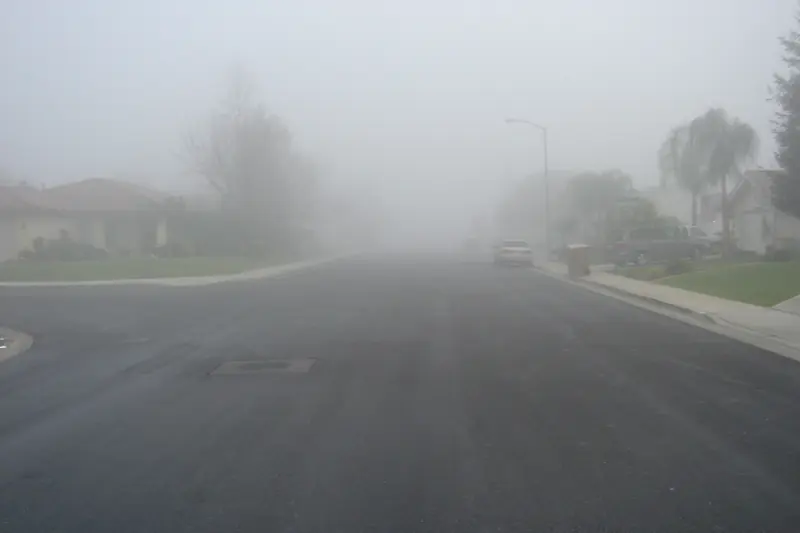
Tule fog season means the same attic ducts switch to carrying warm air through cold, damp months, and their leaks and thin insulation cost heat instead of cooling. The National Weather Service defines tule fog as radiation fog in the Central Valley that forms during night and morning hours in late fall and winter after the first significant rainfall, and calls it a leading cause of weather-related casualties in California.
The Hanford memo dates the usual fog season to the weeks between late November and mid-February, and notes the name comes from the tule reeds once common in Valley marshes. January normal lows at the stations above run from 38.8°F in Modesto to 41.1°F in downtown Sacramento, and record lows in the region sit in the 16–18°F range. ENERGY STAR lists high winter bills, as well as summer ones, among the signs of leaky ducts.
Winter is also gas-furnace season in many Valley homes. Keep a CO alarm on every level. If one goes off or the house smells of gas, get everyone outdoors before anything else; flip no switches and make no calls indoors, then phone 911 or the gas company once you are outside. If you're unsure, call a licensed technician.
Which duct rules change by climate zone?
Duct insulation and refrigerant checks change by zone, while duct sealing after a changeout applies everywhere in the state. Title 24 asks for R-8 wrap on new ducts outside the conditioned envelope in zones 1, 2, 4 and 8–16, which includes 12 and 13; R-6 is allowed only in zones 3 and 5–7. R-6 is not enough on a new duct in Stockton, Modesto, Sacramento or Fresno.
When refrigerant-containing parts of an air-cooled A/C are installed or replaced in zones 2 and 8–15, the 2025 code requires airflow and refrigerant charge verification, with a minimum of 300 CFM per ton (250 for small-duct high-velocity systems), and all thermostats on the system replaced with setback thermostats. Heat pumps need the same checks in every zone. That is the contractor's and the ECC-Rater's job.
The duct leakage limits after an air handler, condenser or coil replacement, 10% total or 7% to outside, apply in all zones. Title 24 HVAC changeout rules walks through them, and any permit applied for from January 1, 2026 onward is judged against the 2025 code, per the state's Building Standards bulletin.
How do designers use local weather?
Designers use local weather to size the load, choose the equipment and set airflow. ACCA describes its Manual J as giving the loads for homes and Manual S as helping choose equipment based on the local climate; the duct layout then follows from ACCA's Manual D. A Fresno house and a Sacramento house with the same floor plan can come out with different loads.
Climate also shapes airflow. The DOE Building America measure guideline notes that drier climates often use 400–450 CFM per ton to get the most sensible cooling, while humid climates run lower; roughly 350–450 CFM per ton covers the range, and the manufacturer's spec governs. Manual D duct sizing explains how those numbers become duct sizes, and the Attic heat row links the other pages on heat.

How this page was put together
This page is based on the CEC building climate zone layer (point lookups at city centers, layer updated August 2026), NOAA NCEI 1991–2020 monthly and annual normals, NOAA Regional Climate Center station records through October 27, 2026, the NWS glossary and NWS Hanford's climate memo on Fresno (2008), the 2025 Title 24 text on Energy Code Ace, the state Building Standards bulletin 25-01, ACCA and the DOE Building America measure guideline (2011), read in October 2026. Left out: winter design temperatures from the CEC's Joint Appendix JA2, because the CEC site could not be reached; the January normal lows stand in for them here.
Questions from the field
Why does Sacramento have two different 100°F-day numbers?
They come from two stations. Downtown (Sacramento 5 ESE) averages 22.6 days a year at or above 100°F, while Executive Airport averages 14.0; always check which station a figure uses.
Is Fresno hotter than Sacramento?
By the 1991–2020 normals, yes: Fresno's airport has a 97.7°F July normal high and 38.4 days at or above 100°F, against 94.4°F and 22.6 days in downtown Sacramento.
Does my climate zone change the duct test?
No. The changeout leakage limits of 10% total or 7% to outside apply in every zone. The zone changes insulation and refrigerant verification rules.
Do zone 12 and zone 13 have different duct insulation rules?
No. Both require R-8 on new ducts in unconditioned space under Title 24.
Does tule fog get into the ducts?
The ducts carry house air, not outdoor air, unless they leak or the system draws in fresh air. Fog season matters mainly because it is heating season, when attic duct losses cost heat.
Where do I check my own climate zone?
Use the CEC's online climate zone lookup with your address, or ask the contractor which zone the permit lists. Addresses near a zone line can differ from the city center.
More on attic heat

Back to the Valley Home Ducts front page