Why Attic Ducts Lose So Much Cooling
The short of it
Attic ducts lose cooling because 50–55°F supply air crosses an attic that can reach 130–140°F, picking up heat through the duct wall and leaking out at joints, while return leaks pull hot attic air in.
Valley Home Ducts, figures checked against their sources · updated
On this page
What to carry away
- DOE Building America (2011) puts hot-day attic temperatures at 130–140°F, at least 80°F above the 50–55°F air in a cooling duct.
- Return leaks can draw 130°F attic air straight into the system, the same guideline warns.
- LBNL found attic and crawlspace ducts typically leak about 15% on each side of the fan, and about 90% of the energy lost from insulated outside ducts is not recovered.
- With duct leakage over 20%, losses can add up to an extra ton of cooling the equipment must make up, per DOE Building America.
- Title 24 calls for R-8 insulation on new ducts in climate zones 12 and 13; the Building America guideline notes older homes may have R-4 or none.
- ENERGY STAR advises sealing with mastic or metal tape and never cloth duct tape.
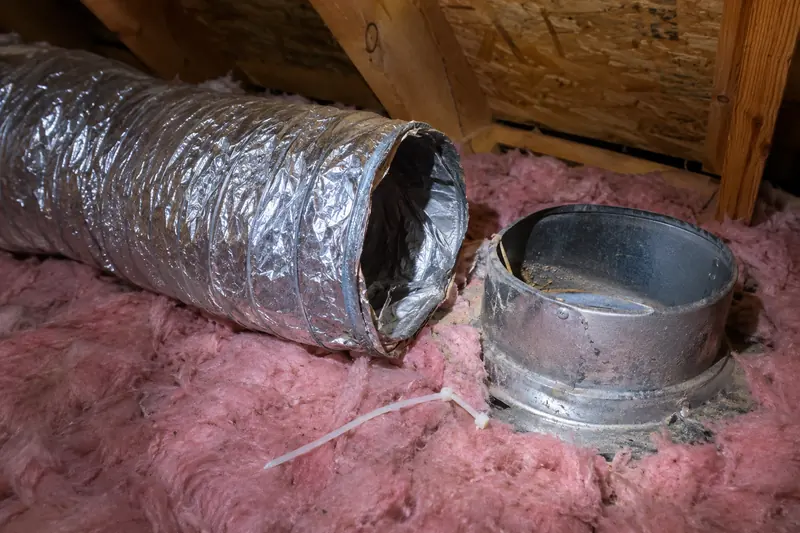
Picture the trip a pound of cooled air takes in a Valley ranch house. It leaves the coil in a hall closet or the garage, rides up into the attic, runs along the trunk and out a flex branch over the ceiling joists, and drops through a register into a bedroom. For most of that trip it is surrounded by the hottest air on the property. Two things go wrong on the way: heat soaks in through the duct wall, and air escapes or gets pulled in through gaps.
Heat and leakage in attic ducts
- 130–140°Fattic air temperature, hot afternoonDOE Building America
- 80°F+gap between attic air and supply airDOE Building America
- ~15%typical leakage on each side of the fan, attic ductsLBNL
- 90%share of energy lost from outside ducts that never comes backLBNL
How hot does a Valley attic get?
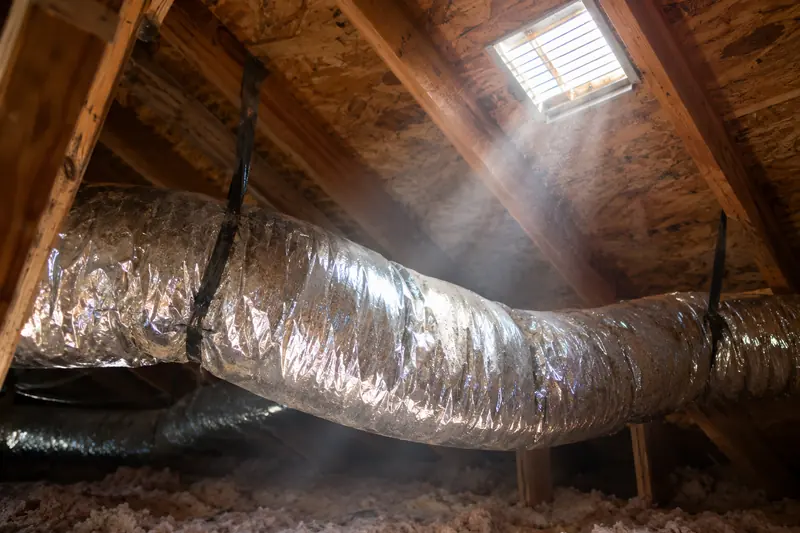
A Valley attic can sit at 130°F to 140°F on a hot summer afternoon, which is the range the DOE Building America measure guideline gives for hot days. The guideline does not tie that range to one climate, but the Valley's outdoor numbers make it easy to believe: July normal highs run 95.4°F at Stockton's airport and 97.7°F at Fresno's, per NOAA's 1991–2020 normals.
A roof in full sun heats the attic well past the outdoor air, and a vented attic has no cooling of its own. The local climate numbers by city, including 100°F-day counts, are on climate zones 12 and 13 and your ducts.
How does heat get into the duct air?
Heat moves through the duct wall by conduction whenever the air outside the duct is hotter than the air inside it. The Building America guideline points out that 50–55°F supply air in a 130°F attic faces a temperature difference of at least 80°F, and the bigger that difference, the faster heat crosses the insulation.
Insulation slows that flow but never stops it. Title 24 sets R-8 for new ducts in unconditioned space in climate zones 12 and 13, while the Building America guideline notes that older homes may have R-4 duct wrap or none at all. Torn jackets, wrap that has slid off a joint and flex lying on hot roof sheathing all add to the gain. Duct insulation R-values for hot attics covers what to look for on the label.
What do supply leaks and return leaks do?
Supply leaks blow air you already paid to cool into the attic, and return leaks pull attic air into the system to be cooled again. Lawrence Berkeley National Laboratory's duct sealing slides put typical attic and crawlspace duct leakage at about 15% on each side of the fan, and add that when insulated ducts sit outside the envelope, roughly nine-tenths of what they lose stays lost (90%).
Return leaks are the sneaky half. The Building America guideline warns that return leaks can draw 130°F attic air into the return side, so the coil starts with a hotter, dustier load than the house air. ENERGY STAR's duct sealing flyer also ties sealing to keeping pollutants from dusty attics out of the ducts.
Leaks matter for gas appliances too. ENERGY STAR notes that leaky ducts can cause backdrafting, where combustion gases are drawn back into the living space, and that sealing can change pressures as well. Any duct sealing in a house with a gas furnace or water heater should come with a combustion safety test by a qualified pro before and after. If you're unsure, call a licensed technician.
| Loss path | What happens | What reduces it |
|---|---|---|
| Conduction through the duct wall | Attic heat crosses insulation into 50–55°F air | R-8 duct insulation, intact jackets |
| Supply leaks | Cooled air escapes into the attic | Mastic or UL 181 foil tape at joints |
| Return leaks | Hot attic air is pulled into the system | Sealing return joints and the return plenum |
| Disconnected or crushed runs | A room gets little or no air | Reconnecting, rehanging or replacing the run |
Why does the loss peak on the hottest afternoons?
Losses peak on the hottest afternoons because that is when the attic is hottest, the temperature gap across the duct wall is widest and the system runs the longest. A system with big duct losses has less cooling left for the rooms just when the house needs the most.
The Building America guideline gives a sense of scale: with duct leakage over 20%, losses can easily amount to one additional ton of cooling the equipment has to supply. LBNL's slides show the same pattern on the demand side, estimating peak electricity demand savings of 25% or more from sealing attic and crawlspace ducts. That is a separate measure from energy use; LBNL puts heating and cooling energy savings from sealing those ducts at about 15–20%.
Which fix comes first?
Sealing usually comes first, then insulation, and both should be followed by an airflow check. ENERGY STAR says to start by sealing air leaks using mastic sealant or metal tape and never to use duct tape, and its heating and cooling page tells homeowners to focus first on ducts in the attic, crawlspace, unheated basement or garage. A 1998 LBNL test of duct sealants found that cloth duct tape was the only product that failed.
Sealing a very leaky system can raise duct pressure and reduce total airflow, the Building America guideline cautions, so ask the contractor to measure airflow before and after. In homes built roughly from the 1930s through the 1970s, have suspect duct wrap checked for asbestos before anyone seals, cuts or tests it. The mastic versus foil tape comparison and the duct leakage test explainer cover the next steps, and the Attic heat row links the rest.
How this page was put together
This page is based on the DOE Building America "Measure Guideline: Sealing and Insulating Ducts in Existing Homes" (2011), LBNL's duct sealing slides (2008) and 1998 duct tape study, ENERGY STAR's duct sealing page and flyer, Title 24 (2025 edition, as reproduced by Energy Code Ace), and NOAA 1991–2020 normals, read in October 2026. LBNL's slides include charts of efficiency and capacity loss for Fresno attic ducts; values read off those charts are left out because the slides give no table. No savings dollars are given, because the modeled figures in the sources are for houses in other climates.
Questions from the field
Does attic duct loss show up on the bill?
It shows up as longer run times, since the equipment has to make up the heat gained and air lost on the way. High bills in summer and winter are on ENERGY STAR's list of leaky-duct clues, but the bill alone cannot separate duct losses from other causes.
Is flex duct worse than metal in a hot attic?
LBNL's slides note that round metal or flex in an attic has fewer joints than rectangular basement duct, so less leakage per side, but it still sits outside the house. Flex that is crushed, kinked or sagging loses airflow, which is covered in the duct design row.
Will more attic insulation help my ducts?
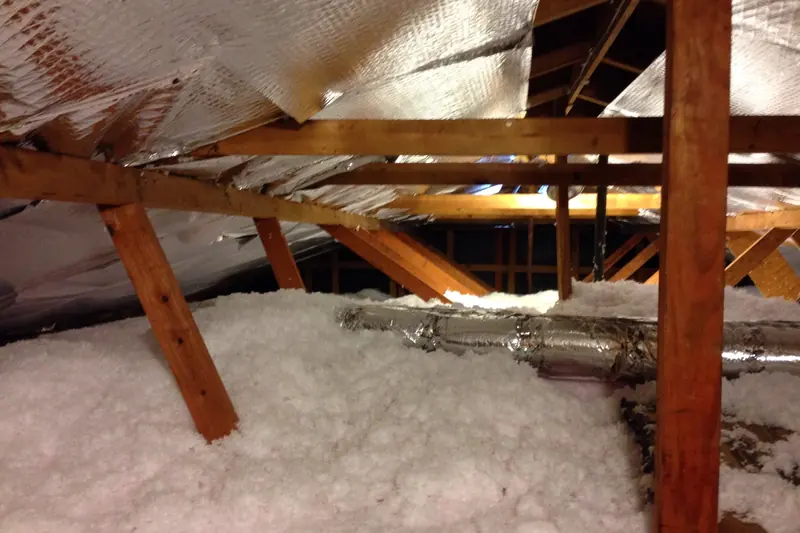
Burying ducts under blown insulation can help in dry climates, according to the Building America Solution Center, if the ducts are sealed and wrapped to R-8 first. Insulation laid over leaky ducts hides the leaks without fixing them.
Why is the register air warm at 5 p.m.?
Late afternoon is when the attic is hottest and the duct run has soaked up the most heat. A long run to a far bedroom gains more than a short one near the air handler.
Does sealing ducts make the system quieter?
Not necessarily. Sealing can raise pressure in the ducts, which is one reason to have airflow measured afterward.
Can I seal ducts myself in summer?
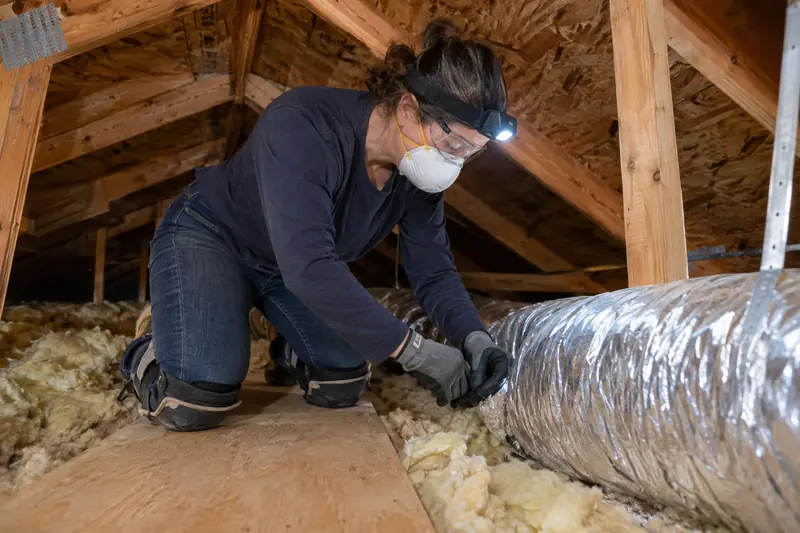
Not in a hot attic. Save reachable joints for a cool spring or fall morning, stay on the joists, and leave anything near a furnace cabinet or suspect asbestos wrap to a pro.
More on attic heat